

Key Moments
Cashier's Check Fee Structure
Chase charges $10 per check, waived only on premium and Secure Banking accounts.In-Person Issuance Required
Cashier's checks are issued only at branches with correct ID and payee details.No Public Limit on Check Amount
The maximum check amount depends on your available balance, not a fixed cap.Lost Check Procedure
Replacing lost or stolen checks requires contacting Chase, possibly paying a fee and indemnity bond.A Chase cashier’s check costs $10, and the fee is waived entirely on several Chase checking accounts. You get one at any Chase branch by asking a teller, providing the payee’s exact name and amount, and showing a valid photo ID. The funds come out of your account immediately, and the check is backed by the bank itself, which is why landlords, car sellers, and closing attorneys often insist on one.
Here is everything worth knowing before you head to the branch, including who skips the fee, whether there is a dollar limit, and what to do if the check is lost.
Quick Facts: Chase Cashier’s Check
| Detail | Answer |
|---|---|
| Fee | $10 per check |
| Fee waived on | Chase Secure Banking, Premier Plus Checking, Sapphire Checking, Private Client Checking |
| Fee not waived on | Chase Total Checking |
| Available to non-customers | No, Chase account required |
| Where to get one | Any Chase branch, in person |
| Dollar limit | No published maximum; limited by your available balance |
| Funds withdrawn | Immediately, at time of issue |
| What to bring | Valid photo ID, account details, payee’s exact name, amount |
How Much Does a Cashier’s Check Cost at Chase?
The standard fee is $10 per check. Whether you actually pay it depends on which Chase checking account you hold.


| Account type | Cashier’s check fee |
|---|---|
| Chase Secure Banking | Waived |
| Chase Total Checking | $10, not waivable |
| Chase Premier Plus Checking | Waived |
| Chase Sapphire Checking | Waived |
| Chase Private Client Checking | Waived |
| Non-customers | Not available |
If you hold Chase Total Checking, the bank’s most popular account, you pay the full $10 each time. Customers on Secure Banking and the premium tiers get cashier’s checks at no charge as a built-in account benefit.
That $10 puts Chase in the middle of the pack. Major banks generally charge somewhere between $8 and $15 per cashier’s check, and many waive it on premium accounts. For a full comparison across banks, see our guide to how much a cashier’s check costs.
How to Get a Cashier’s Check From Chase
Chase issues cashier’s checks in person at its branches. The process usually takes a few minutes:
- Visit any Chase branch and tell the teller you need a cashier’s check.
- Provide the payee details. You will need the exact name of the person or business the check is payable to, spelled correctly, and the exact amount. Cashier’s checks cannot be edited after printing, so double-check both.
- Show identification. A valid driver’s license, state ID, or passport works. Have your account number or debit card handy.
- Pay for the check. The full amount plus the $10 fee (if your account does not waive it) is withdrawn from your account on the spot.
- Keep the receipt. It is your proof of purchase and becomes important if the check is ever lost or stolen.
For a general walkthrough that applies at any bank, see our guide on how to get a cashier’s check.
Can You Get a Chase Cashier’s Check Online?
Chase does not offer a broad online ordering option for cashier’s checks the way some competitors do. Plan on visiting a branch. If a branch trip is genuinely impossible, call Chase customer service or check the Chase mobile app for your account’s current options, since services like this change over time.
Can Non-Customers Get a Cashier’s Check at Chase?
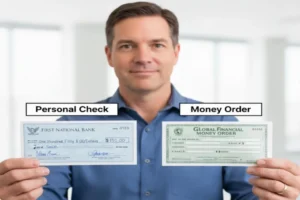
No. Chase only issues cashier’s checks to its own account holders. If you do not bank with Chase, your options are opening an account, using your own bank, or considering a money order for smaller amounts. Our comparison of cashier’s checks vs money orders covers when each makes sense.
Is There a Limit on a Chase Cashier’s Check?
Chase does not publish a maximum dollar amount for cashier’s checks issued in a branch. In practice, the limit is your available account balance, since the full amount is withdrawn the moment the check is issued. That is exactly why cashier’s checks are the standard instrument for large payments like home closings and vehicle purchases: the ceiling is your balance, not an arbitrary cap.
Money orders, by contrast, are typically capped around $1,000, which is the main reason large transactions call for a cashier’s check instead.
Chase Cashier’s Check vs Certified Check
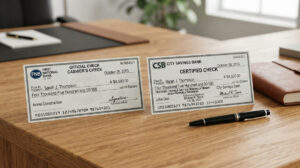
Searchers often use the two terms interchangeably, but they are different instruments. A cashier’s check is issued by the bank and drawn on the bank’s own funds. A certified check is your personal check that the bank verifies and stamps, confirming your account holds sufficient funds.
In day-to-day practice at Chase, the product you will be offered for guaranteed payment is the cashier’s check. Cashier’s checks are generally considered the stronger guarantee, since the bank itself stands behind the payment rather than certifying yours. If a recipient asks you for a “certified check,” a cashier’s check will satisfy the requirement in nearly all cases, though it never hurts to confirm with them first.
For a deeper breakdown of the differences, see our guide on certified checks vs cashier’s checks.
What If a Chase Cashier’s Check Is Lost or Stolen?
Treat a cashier’s check like cash, because replacing one is slow. If a check goes missing, contact Chase immediately. The bank may require an indemnity bond, which is essentially insurance protecting the bank in case the original check surfaces and gets deposited. There can be a cancellation fee, and the reissue process can take weeks or, in some cases, months.
This is also why you keep the receipt: it is your proof the check existed and what it was for.
How to Verify a Chase Cashier’s Check Is Real
If someone pays you with a Chase cashier’s check, especially in a private sale, verify it before handing anything over. Warning signs of a counterfeit include missing watermarks or security features, blurry or misaligned printing, and a bank logo or address that does not match Chase’s real details.
The safest verification method is bringing the check to a Chase branch, or better, completing the transaction at one, where a banker can confirm on the spot whether the check is genuine and the funds are real. Never rely on a phone number printed on the check itself, since scammers print their own.
FAQ
How much is a cashier’s check at Chase?
$10 per check. The fee is waived on Chase Secure Banking, Premier Plus Checking, Sapphire Checking, and Private Client Checking. Chase Total Checking customers pay the full fee.
Does Chase Total Checking waive the cashier’s check fee?
No. Total Checking is the one mainstream Chase checking account where the $10 fee always applies.
How long does a Chase cashier’s check take to clear?
Funds from a cashier’s check deposited in person are often available as soon as the next business day, faster than a personal check. Exact timing depends on the receiving bank and the deposit amount.
Can I get a cashier’s check at Chase without an account?
No. Chase issues cashier’s checks only to account holders. Non-customers should use their own bank or credit union.
Is there a maximum amount for a Chase cashier’s check?
Chase does not publish a cap. The practical limit is your available balance, since the funds are withdrawn immediately when the check is issued.
Does Chase charge to cancel a cashier’s check?
A cancellation fee may apply, and Chase may require an indemnity bond before reissuing a lost or stolen check. The process can take weeks or longer.
Disclaimer: This article is for general informational purposes only and does not constitute financial advice. Fees, account terms, and policies are set by JPMorgan Chase Bank, N.A. and can change at any time. Confirm current fees and requirements directly with Chase before making decisions.