
Key Moments
Seasonal Impact on Gas Bills
Winter months drastically increase gas usage and costs compared to summer.Home Gas Usage Variability
Homes using gas for heating, water heating, and appliances have higher bills than those using gas only for cooking.Influence of Home Size and Insulation
Larger and older homes with poor insulation consume more gas to maintain temperature.Effective Ways to Lower Gas Bills
Simple actions like thermostat setback, sealing drafts, and servicing the furnace reduce costs.The average gas bill in the US lands between roughly $60 and $100 per month when spread across the whole year. That average hides a huge seasonal swing. In warm months a gas bill can drop to $20 to $40, while a cold January in a northern state can push the same household past $150 to $200. Your location, home size, and what your home actually runs on gas are the three factors that decide where you fall.
Average Gas Bill Quick Facts
| Question | Typical answer |
|---|---|
| National average per month | About $60 to $100, annualized |
| Winter month, cold climate | $150 to $200 or more |
| Summer month | $20 to $40 |
| One-bedroom apartment | Roughly $30 to $60 per month |
| Three-bedroom house | Roughly $90 to $120 per month |
| Biggest cost driver | Heating in winter |
| Billing unit | Therms (or Ccf/Mcf, depending on utility) |
All figures are typical ranges from national pricing surveys and utility data. Your bill depends on local rates and usage.
What Decides Your Average Gas Bill Per Month
What your home runs on gas
This is the single biggest variable. A home that uses natural gas only for cooking might see bills under $20 most months. A home with a gas furnace, gas water heater, gas stove, and gas dryer stacks all of those onto one bill, and the furnace alone typically accounts for the majority of annual gas costs.


Season and climate
Gas usage is heavily heating-driven, so bills follow the thermometer. Households in cold states can use several times more gas in January than in July. Interestingly, states with mild climates sometimes have higher gas prices per unit but lower average bills, simply because residents barely run heating.
Home size and age
More square footage means more space to heat. Older homes with weaker insulation and aging furnaces burn noticeably more gas to hold the same temperature. A drafty 1960s house can out-consume a well-sealed new build twice its size.
Local rates and fixed charges
Utilities bill gas in therms or hundreds of cubic feet, plus fixed monthly service and delivery charges that you pay even in months when you barely use gas. Those fixed charges are why a summer gas bill rarely drops to zero.
Average Gas Bill by Home Size
| Home type | Typical monthly range (annualized) |
|---|---|
| Studio or 1-bedroom apartment | $30 to $60 |
| 2-bedroom apartment | $40 to $75 |
| 3-bedroom house | $90 to $120 |
| Large house (4+ bedrooms) | $120 to $180 |
Apartments run cheaper for two reasons: less space to heat, and shared walls that leak less warmth. Some buildings also cover gas heat in the rent. If you are comparing rentals, our explainer on what utilities included means covers how that works.
Average Gas Bill in Winter vs Summer
For a typical gas-heated home, the seasonal curve looks like this:
| Season | Typical monthly bill |
|---|---|
| Winter (Dec to Feb) | $100 to $200+ |
| Spring (Mar to May) | $50 to $90 |
| Summer (Jun to Aug) | $20 to $40 |
| Fall (Sep to Nov) | $40 to $80 |
If seasonal swings make budgeting hard, most utilities offer a leveling program that averages your costs into equal monthly payments. We break down how it works, and its catch, in our guide to budget billing.
How to Tell if Your Gas Bill Is Normal
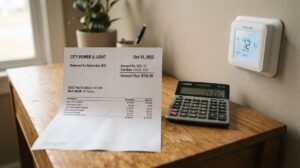
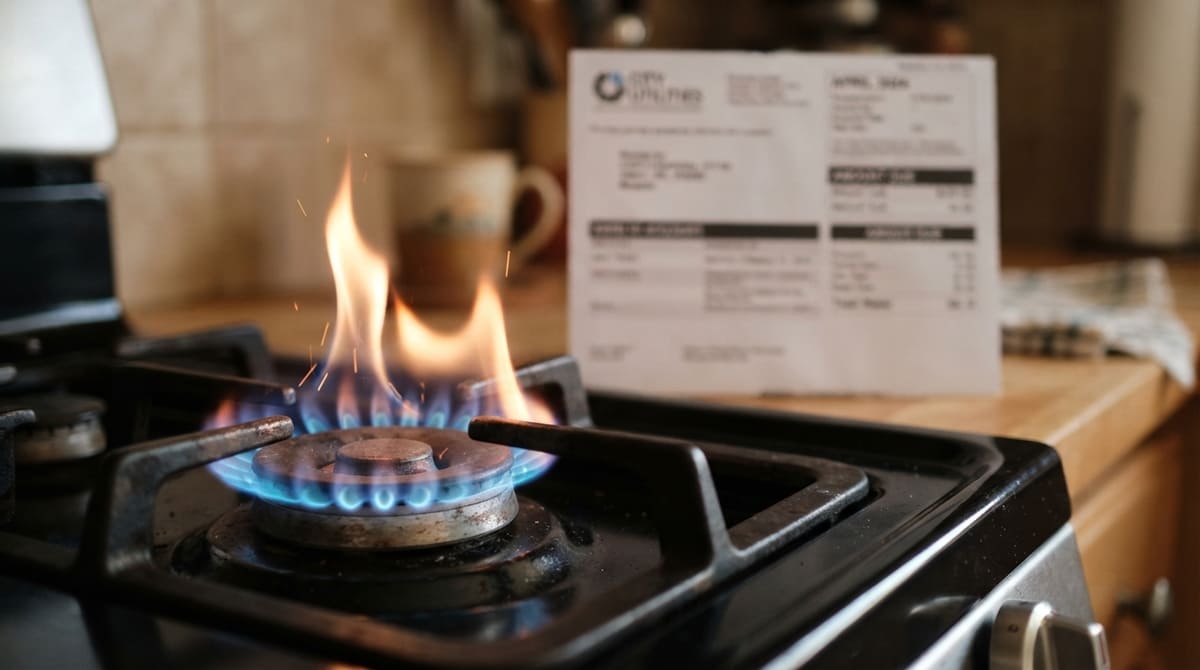
Compare therms, not dollars. Your bill shows how many therms you used this month and usually the same month last year. If your therms are flat but the dollar amount jumped, rates or fees went up. If therms jumped, your consumption did, and the usual suspects are a colder month, a thermostat change, a failing furnace, or a water heater issue.
As a rough anchor, a three or four person household in a gas-heated home often uses somewhere near 60 to 80 therms in an average month, far more in deep winter and far less in summer. A high reading in July with no pool heater or unusual hot water use is worth investigating.
Five Ways to Lower Your Gas Bill
- Drop the thermostat a few degrees in winter. Each degree of setback for eight hours a day trims roughly 1 to 3 percent off heating costs. A programmable thermostat automates it.
- Seal drafts. Weatherstripping doors and caulking window gaps is the cheapest insulation money can buy.
- Lower the water heater to 120°F. Most are set hotter than needed.
- Service the furnace and replace filters. A struggling furnace burns more gas for the same heat.
- Wash clothes cold and shorten showers. Water heating is usually the second-largest gas use after space heating.
Gas is only one line in your monthly household stack. For the full picture, see our pillar guide on how much utilities cost for an apartment, plus the companion breakdowns of the average electric bill for a 1-bedroom apartment and the average internet bill.
Average Gas Bill FAQ
How much is a gas bill for one person?
A single person in an apartment typically pays $25 to $50 per month annualized, assuming gas covers heat and hot water. With electric heat and gas only for cooking, it can be under $15.
Why is my gas bill so high in winter?
Heating. A gas furnace can use five to ten times more gas in January than your stove and water heater combined. Cold snaps, thermostat settings, and poor insulation amplify it.
Is natural gas cheaper than electric heat?
In most of the US, heating with natural gas costs less per unit of heat than electric resistance heating, though modern heat pumps have closed the gap in milder climates. Local rates decide the winner.
Do I pay a gas bill if my apartment has electric everything?
No gas usage bill, though check your lease. All-electric units push those costs onto your electric bill instead.
What is a therm?
A therm is a unit of heat energy equal to 100,000 BTU, and it is how most utilities measure the gas you burn. It plays the same role for gas that a kilowatt hour plays for electricity. Curious about the electric side? See what a kilowatt hour is.
This article is for general information only. Gas prices and utility charges vary by provider, region, and season. Check your utility’s current rates for exact figures.