Key Moments
Guarantor service fee structure
Fees are a percentage of total lease rent paid upfront to back the lease.Income requirements for personal guarantors
Personal guarantors must meet an 80x monthly rent income threshold with strong credit.When to choose a personal guarantor
It’s cheaper if someone qualified and willing is known, despite the financial risk involved.Alternatives if guarantor approval fails
Security deposits, prepaying rent, or a co-signer living in the unit can be fallback options.A guarantor makes a shaky rental application look solid, but there are two ways to get one: pay a company a fee, or find a person with the income and credit to back you for free. They don’t cost the same thing, and the difference is bigger than most renters expect. Use the calculator below to see exactly what each route means for your rent.
Renter Tools · Lead Paragraph
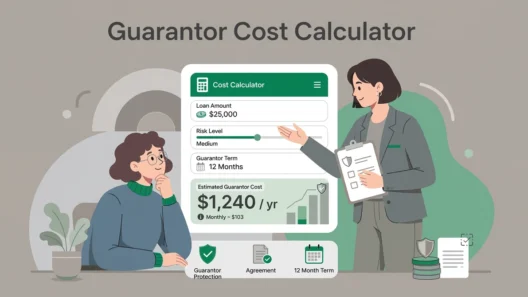
Guarantor Cost Calculator
Compare what a guarantor service charges against the income a personal guarantor would need to qualify — then decide which is worth asking for.
Guarantor service
- Total rent for lease term
- $18,000
- Fee rate applied
- × 7.0%
- Fee due at signing
- $1,260
- ≈ added per month
- $105/mo
Paid upfront, non-refundable. No cosigner required — a company backs the lease instead.
Personal guarantor
- What a qualifying tenant alone needs (40×)
- $60,000/yr
- What the guarantor needs (80×)
- $120,000/yr
- Credit score, typical floor
- 700+
No cash cost — but it asks someone you know to take on real financial risk for your lease.
Fee rates and income multiples vary by guarantor company, landlord, and city — these are planning estimates, not a quote. Always confirm exact terms before signing.
How the numbers work
Guarantor services don’t charge a flat rate. Most price their fee as a percentage of the total rent over your lease, typically 4% to 10%, taken as a single non-refundable payment when you sign. On an $18,000 annual lease, that’s anywhere from about $720 to $1,800 — money that buys you a company’s financial backing instead of a person’s.
A personal guarantor works differently. They don’t pay anything upfront, but they do need to qualify, and the bar is higher than the one you cleared (or didn’t) on your own. Landlords typically want a guarantor’s annual income to run about 80 times the monthly rent — double the roughly 40x multiple used to screen a regular tenant — plus a credit score in the 700s.


The 80x rule, explained
If rent is $1,500 a month, a landlord screening a standalone tenant usually wants to see about $60,000 a year in income (40 × rent). A guarantor is held to a stricter standard because they’re the backup plan, not the resident: landlords typically look for roughly $120,000 a year (80 × rent) plus strong credit before they’ll accept someone in that role.
That’s the real reason guarantor services exist. Not everyone has a parent, relative, or close friend clearing six figures with excellent credit who’s also willing to co-sign a stranger’s lease. When that person doesn’t exist, a fee-based service fills the gap.
When a personal guarantor beats a paid service
If you can ask, it’s almost always the cheaper option — a personal guarantor costs $0 in fees, full stop. The trade-off isn’t financial, it’s relational: you’re asking someone to take on real liability for your rent if you fall behind. That’s worth being upfront about before you ask, including how you plan to make sure they never actually have to pay.
A service makes sense when that ask isn’t realistic — no one in your life meets the income bar, or you’d rather not put a relationship on the hook for a lease. In that case, the fee is effectively the price of financial privacy and speed: most services approve faster than it takes to track down pay stubs from a relative three states away.
Quick answers
Does using a guarantor service affect my credit? No — the fee and the backing apply to the lease, not your personal credit file. Missed rent still gets handled between you, the landlord, and the guarantor service under whatever terms you signed.
Can I negotiate the guarantor service fee? Sometimes. Rates vary by company, city, and how competitive the rental market is, so it’s worth comparing at least two services before signing — the calculator above shows how much a couple of percentage points actually moves the total.
What if I can’t get approved either way? A larger security deposit, prepaying a few months of rent, or a co-signer who’d actually live in the unit are the usual fallbacks landlords will consider — worth raising before you assume the apartment is out of reach.
Want the full breakdown of what guarantors do and how landlords use them? See our guide to apartment guarantors.