

Key Moments
Limits on Deposit Amounts
State laws often cap security deposits, with recent changes lowering maximum amounts.Deductible vs Nondeductible Charges
Landlords can deduct unpaid rent, damage beyond wear and tear, but not normal aging.Deposit Return Timing and Requirements
Deposits must be returned within 14-45 days, often with an itemized statement.Recovering Wrongfully Withheld Deposits
Tenants can send demand letters and sue in small claims court for improper withholding.Your security deposit is your money. A landlord holds it during your tenancy as protection against unpaid rent and damage, but when you move out and leave the place in good shape, most of it should come back to you. Too many renters lose part or all of a deposit they were entitled to, simply because they did not know the rules or did not document the unit’s condition.
This guide explains how much a landlord can charge, what they can and cannot deduct, when you are owed your money back, and exactly what to do if a landlord tries to keep more than they should. Rules differ from state to state, so use this as your starting framework and confirm the specifics where you live.
Quick facts: security deposits
| Question | Short answer |
|---|---|
| What is a security deposit? | Money held by the landlord to cover unpaid rent or damage beyond normal wear and tear. |
| How much can a landlord charge? | Commonly one to two months’ rent, though many states cap it and some set no limit. |
| What can be deducted? | Unpaid rent, repair of tenant-caused damage, and sometimes cleaning to restore the unit. |
| What cannot be deducted? | Normal wear and tear, such as faded paint or minor carpet wear. |
| When is it returned? | Usually within 14 to 45 days after move-out, depending on the state. |
| If the landlord wrongly withholds it? | You can send a demand letter and, if needed, sue in small claims court. |
How much can a landlord charge for a security deposit?
The amount is set in your lease, but state law often limits it. Many states cap the deposit at one or two months’ rent, while a handful set no cap at all and leave it to the market. Furnished units and tenants with pets sometimes carry higher deposits where state law allows.


Some states have recently tightened these limits, so check the current rule where you rent. As examples, California reduced the standard cap to one month’s rent in 2024, with a limited exception for certain small landlords, and Maryland lowered its cap to one month’s rent for leases signed on or after October 1, 2024. These figures change, so verify them against your state’s current law rather than relying on them as fixed.
If a landlord charges more than your state allows, that overcharge is usually recoverable, and several states impose penalties on top of it.
What can a landlord deduct from your deposit?
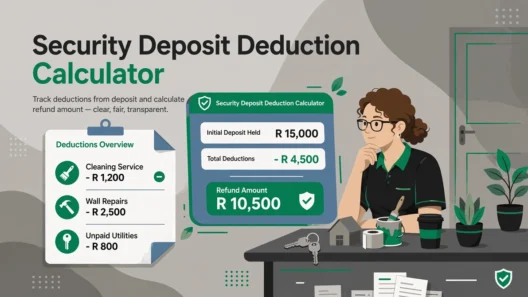
A landlord can generally deduct from your deposit for:
- Unpaid rent, including any rent still owed if you left early. If you ended your lease before the term was up, read our guide on how to break a lease for how that interacts with your deposit.
- Damage beyond normal wear and tear, such as a broken window, large holes in the wall, or a stained or burned carpet.
- Cleaning costs needed to return the unit to the condition it was in when you moved in, if you left it noticeably dirty.
- Unpaid utilities or other charges the lease makes you responsible for, where state law permits.
What a landlord generally cannot charge you for is ordinary wear and tear, the gradual aging that happens from normal living.
Damage versus normal wear and tear
This distinction is where most deposit disputes start. Normal wear and tear is the expected, gradual decline of a unit over time. Damage is harm caused by neglect, accident, or misuse.
- Faded paint, minor scuffs, and lightly worn carpet are usually wear and tear.
- Large holes, pet stains, broken fixtures, and burns are usually damage.
Landlords sometimes overestimate what counts as deductible damage, which is exactly why move-in and move-out documentation matters so much.
When do you get your security deposit back?
Most states require a landlord to return your deposit within a set window after you move out, often somewhere between 14 and 45 days. If the landlord keeps any portion, most states also require them to send an itemized statement listing each deduction and its cost.
Deadlines and itemization rules vary widely by state, and missing them can expose a landlord to penalties. In some states a landlord who fails to follow the rules can owe the tenant two or three times the wrongly withheld amount, plus attorney’s fees. Confirm your state’s deadline and penalty so you know your timeline and your leverage.
How to get your full security deposit back
Most of getting your money back happens before move-out day, not after.
- Document the unit when you move in. Walk through with a written checklist and date-stamped photos or video of any existing flaws. Share a copy with your landlord. This is your single best protection against being blamed for pre-existing damage.
- Read your lease for cleaning and notice requirements. Some leases require professional carpet cleaning or a specific notice period before move-out.
- Give proper written notice. Provide the notice your lease requires and confirm your move-out date.
- Clean thoroughly and repair what you can. Patch small nail holes, clean appliances, and remove all your belongings.
- Do a move-out walkthrough. Where state law allows, request a final inspection with the landlord present so you can address issues before you hand over the keys. Photograph the empty unit.
- Return the keys and provide a forwarding address. The landlord needs somewhere to send your refund and the itemized statement.
What to do if your landlord will not return your deposit
If the deadline passes with no refund and no itemized statement, or the deductions look unfair, you have options.
First, send a written demand letter. State the amount you are owed, reference your move-out date and your state’s deposit law, and attach your lease and your move-out photos. A clear, documented demand is often enough on its own, because it signals you know your rights.
If that does not work, you can file in small claims court, which is designed to be used without a lawyer. Bring your lease, your move-in and move-out documentation, the demand letter, and any itemized statement the landlord sent. Because many states let you recover a multiple of the wrongly withheld deposit plus fees, the math frequently favors the tenant who kept good records.
Do you get interest on your security deposit?
In some states, yes. A number of states require landlords, sometimes only those above a certain number of units, to hold deposits in a separate interest-bearing account and pay you the interest. Whether this applies to you depends entirely on your state and sometimes your building size, so it is worth checking your local rule.
Frequently asked questions
Can a landlord keep my whole security deposit? Only for legitimate, documented reasons such as unpaid rent or real damage beyond normal wear and tear. Keeping it without cause, or without the required itemized statement, generally violates state law.
Can my deposit be used as last month’s rent? Usually not, unless your lease or state law specifically allows it. Assume you still owe your final month’s rent and that the deposit is separate.
How long does a landlord have to return my deposit? It depends on your state, but commonly 14 to 45 days after you move out. Many states also require an itemized list of any deductions within that window.
Can a landlord charge me for normal wear and tear? No. Faded paint, minor scuffs, and lightly worn carpet from ordinary use are the landlord’s responsibility, not yours.
What if I never got a move-in inspection? You can still document the unit’s condition with photos and a written list now, and it is wise to do so before you move out so you have a record to compare against.