

Key Moments
30% Rent Guideline
Keep rent at or below 30% of gross monthly income as a key affordability benchmark.Impact of Debt and Expenses
Debt payments and local cost of living significantly influence how much rent you can afford.50/30/20 Budget Rule
Use the 50% needs budget to ensure rent fits alongside other essentials.Ways to Make Rent Affordable
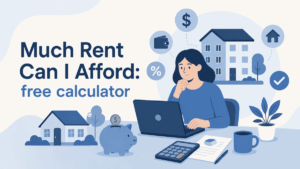
Strategies like roommates, wider search areas, and lease negotiation can lower housing costs.Before you start apartment hunting, it helps to know your number. Spend too much on rent and the rest of your budget gets squeezed every month. Spend too little and you may pass up a place you could comfortably manage. The calculator below gives you a fast, realistic estimate based on your income, and the guidance underneath explains how to read that number for your own situation.
Rent Affordability Calculator
See how much rent you can comfortably afford based on your income.
This is an estimate, not financial advice. Landlords often look for rent at or below 30% of gross monthly income.
How much of your income should go to rent?
The most widely used guideline is the 30% rule: aim to keep your rent at or below 30 percent of your gross monthly income, meaning your income before taxes. It is a starting point, not a law, but it is also the figure many landlords use when screening applicants.
Here is what 30 percent looks like at a few income levels:

| Gross monthly income | 30% rent target |
|---|---|
| $3,000 | $900 |
| $4,000 | $1,200 |
| $5,000 | $1,500 |
| $6,500 | $1,950 |
| $8,000 | $2,400 |
If you carry debt, save aggressively, or live in a high cost area, you may want to aim lower, closer to 25 percent. If your other expenses are light, stretching toward 35 to 40 percent can be workable. That is why the calculator lets you slide the percentage to match your life rather than locking you into one number.
The 50/30/20 budget rule
Another way to sanity check your rent is the 50/30/20 rule, which splits your after-tax income into three buckets:
- 50% needs, including rent, utilities, groceries, transportation, and minimum debt payments.
- 30% wants, such as dining out, subscriptions, and entertainment.
- 20% savings and debt payoff, including your emergency fund and retirement.
Since rent has to fit inside the 50 percent “needs” bucket along with your other essentials, this rule naturally pushes rent toward the lower end of the 30% guideline. If your rent alone eats most of your needs budget, that is a signal to look for something more affordable.
What affects how much rent you can really afford
The calculator gives you a clean estimate, but a few real-world factors shift the right number for you:
- Debt payments. Student loans, car payments, and credit card minimums all compete with rent for the same income. The optional debt field in the calculator accounts for this.
- Cost of living. Utilities, groceries, and transportation cost very different amounts city to city, which changes how much is left for rent.
- Savings goals. If you are building an emergency fund or saving for a home, you may want to spend less on rent. Our guide on renting versus buying covers that trade-off.
- Upfront move-in costs. Beyond rent, plan for a security deposit and first month’s rent before you sign.
- Landlord requirements. Many landlords require your gross monthly income to be about three times the rent, or proof of income through pay stubs, so the math runs both ways.
How to make rent more affordable
If your target number is lower than the rents you are seeing, a few moves help:
- Get a roommate. Splitting rent and utilities is the fastest way to lower your housing cost.
- Widen your search area. Rent can drop sharply a neighborhood or two away from the most in-demand blocks.
- Negotiate. Longer lease terms or move-in timing can sometimes earn a lower rate.
- Stay flexible on timing. A month-to-month lease often costs more, while a longer fixed lease can lock in a better rate.
Once you have your number and a place in mind, a first apartment checklist helps you budget for everything you will need on move-in day.
Frequently asked questions
How much rent can I afford on a $50,000 salary? At roughly $4,167 gross per month, the 30% rule puts your rent target near $1,250 a month. Adjust down if you carry debt or want to save more.
Is the 30% rule still realistic? It is a useful benchmark, but in expensive cities many renters spend more, and in lower cost areas you may comfortably spend less. Use it as a starting point, then check your full budget.
Do landlords really require income of three times the rent? Many do. A common screening standard is gross monthly income equal to about three times the monthly rent, which lines up closely with the 30% rule.
Should rent include utilities in my budget? Plan for utilities separately unless they are explicitly included in your rent. Budgeting for them on top of rent keeps your estimate realistic.
What if my rent is more than 30% of my income? It can still work if your other costs are low and you have savings, but it leaves less room for emergencies. Look closely at the rest of your budget before committing.