
Key Moments
Thermostat Adjustment
Small thermostat tweaks in winter and summer can significantly reduce energy bills.Seal Air Leaks
Sealing gaps around windows and doors can save 5% to 30% on heating and cooling costs.Switch to LED Bulbs
Replacing incandescent bulbs with LEDs reduces electricity use by up to 90%.Shop Electricity Supplier
In deregulated markets, choosing a competitive supplier can lower per-kWh rates and bills.The fastest ways to lower your electric bill are to adjust your thermostat by a few degrees, seal air leaks around windows and doors, switch to LED bulbs, unplug idle electronics, and run large appliances during off-peak hours. Most of these cost little or nothing, and together they can trim a typical bill by a meaningful amount every month. Below are 15 changes ranked from free habits to bigger upgrades.
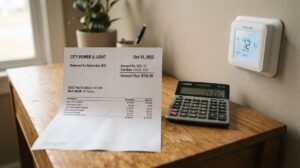
For context, the average U.S. residential electricity price reached about 18.8 cents per kilowatt hour in 2026, based on U.S. Energy Information Administration (EIA) data, up from roughly 16.6 cents in 2024. The average household paid around $144 a month for electricity in 2024, which works out to about $1,728 a year. Small changes to how you use power add up quickly against numbers like those.
Quick Facts: Lowering Your Electric Bill
| Question | Quick answer |
|---|---|
| Average U.S. electricity price (2026) | About 18.8 cents per kWh (EIA) |
| Average monthly bill (2024) | About $144 per month (EIA) |
| Biggest energy user in most homes | Heating and cooling, around 43% (DOE) |
| Fastest free fix | Adjust the thermostat and seal air leaks |
| Possible savings from sealing leaks | 5% to 30% (DOE) |
| Help if you cannot pay | LIHEAP, or dial 211 for local assistance |
First, Know Where Your Money Goes
Before you change anything, it helps to understand what is driving the number. Heating and cooling make up the largest share of a typical home’s energy use, around 43% according to the U.S. Department of Energy. Water heating, appliances, and lighting take up most of the rest.
If your bill has jumped recently, the cause is often seasonal, a rate increase, or a single power-hungry appliance rather than your habits across the board. Our guide on why your electric bill is so high walks through the common culprits. It also helps to understand what a kilowatt hour is, since that is the unit your provider charges you for.
No-Cost Changes You Can Make Today
These cost nothing and start saving money on your next bill.
1. Adjust your thermostat
Because heating and cooling are the biggest drivers, the thermostat is the single most powerful control you have. The Department of Energy suggests around 68 degrees Fahrenheit in winter and 78 degrees in summer. Nudging the setting a few degrees toward the outside temperature, especially while you are asleep or away, lowers your bill without a major hit to comfort.
2. Shift usage to off-peak hours
Many utilities offer time-of-use rate plans that charge less during off-peak hours, usually late at night and early morning, and more during peak demand in the late afternoon and evening. If you are on one of these plans, running the dishwasher, laundry, or EV charger overnight can cut the cost of the same tasks. Check your provider’s website to see whether a time-of-use plan is available and when the off-peak window falls.
3. Run full loads and wash in cold
Your dishwasher and washing machine use nearly the same energy whether they are half full or full, so wait for full loads. Washing clothes in cold water removes the water-heating cost, which is where most of a laundry cycle’s energy goes.
4. Unplug idle electronics
Devices such as TVs, chargers, game consoles, and computers keep drawing power even when switched off. The Department of Energy estimates this standby or “phantom” load can account for 5% to 10% of home energy use, on the order of $100 a year. Grouping electronics on a power strip and flipping it off, or using a smart power strip, stops the drain.
5. Use ceiling fans instead of cranking the AC
A ceiling fan uses only a fraction of the energy a central air conditioner does and can make a room feel several degrees cooler. That lets you raise the thermostat in summer without feeling the difference. Just switch fans off when you leave the room, since they cool people, not spaces.
6. Lower your water heater temperature
Water heating is often the second-largest line on your bill. Setting the water heater to 120 degrees Fahrenheit instead of the factory default of 140 is enough for most households. The Department of Energy notes you save roughly 3% to 5% in water-heating costs for every 10-degree reduction, and you lower the risk of scalding at the same time.
7. Use curtains to your advantage
Windows are a major source of wasted energy. Closing curtains and blinds on hot, sunny days keeps heat out in summer, and opening them to let in sun during the day then closing them at night helps in winter. It is free and surprisingly effective.
Low-Cost Upgrades That Pay for Themselves
Spend a little now, save steadily afterward.
8. Switch to LED bulbs
LED bulbs use up to 90% less energy than old incandescent bulbs and last around 25 times longer, according to the Department of Energy. Replacing the bulbs you leave on the longest first gives you the quickest return.
9. Seal air leaks
Air escaping around windows, doors, and other gaps forces your heating and cooling system to work harder. Sealing those leaks with weatherstripping and caulk can save 5% to 30% on energy costs, per the Department of Energy. A tube of caulk and a roll of weatherstripping cost only a few dollars.
10. Install a smart or programmable thermostat
A programmable or smart thermostat automates the setbacks from tip one, adjusting the temperature when you sleep or leave the house so you never have to remember. Many pay for themselves within a year or two through the savings they lock in.
11. Fit a water-efficient showerhead
An efficient, EPA WaterSense-labeled showerhead reduces the amount of hot water you use, which lowers both your electric and water bills. The EPA estimates the average family can save more than $75 a year in energy and water costs by making the swap.
Bigger Moves for Long-Term Savings
Worth planning for if you want deeper cuts.
12. Get an energy audit
An energy audit is a professional assessment that pinpoints exactly where your home is losing energy, from leaky ducts to poor insulation. Many utility companies offer them free or at low cost. The recommendations tell you which fixes will actually move your bill rather than guessing.
13. Upgrade to efficient appliances
When an old refrigerator, dryer, or HVAC system is due for replacement, choosing an ENERGY STAR model can noticeably reduce the energy it uses over its lifetime. Refrigerators run constantly, so an efficient one delivers savings every hour of every day. Keep your fridge between 37 and 40 degrees Fahrenheit and the freezer around 5 degrees so it is not working harder than it needs to.
14. Improve insulation
Adding insulation in the attic and sealing ductwork keeps conditioned air where you want it. Because heating and cooling dominate your bill, insulation is one of the highest-impact upgrades for households that plan to stay put for a few years.
Change Your Rate, Not Just Your Usage
Cutting usage is only half the equation. What you pay per kilowatt hour matters too.
15. Shop your electricity supplier
If you live in a state with a deregulated electricity market, you can shop for the company that supplies your power while your local utility still delivers it and handles outages. Comparing suppliers and locking in a competitive fixed rate can save a share of your bill, particularly if you have been sitting on your utility’s default rate. Off-peak seasons like spring and fall are usually the best times to switch, when demand and rates are lower.
You can also ask your utility about budget billing, which averages your yearly cost into equal monthly payments. It does not lower your total, but it removes the seasonal spikes and makes budgeting easier.
What to Do If You Cannot Afford Your Electric Bill
If you are falling behind, act before the bill goes to collections or service is at risk. Call your provider first and explain your situation, since many offer payment plans or can defer a balance. The Low Income Home Energy Assistance Program (LIHEAP) helps eligible households cover energy costs, and dialing 211 or visiting 211.org connects you with local assistance programs run by United Way.
For a fuller picture of what a reasonable monthly total looks like, compare your numbers against our breakdowns of the average electric bill for a one-bedroom apartment and how much utilities cost for an apartment.
Frequently Asked Questions
What uses the most electricity in a home? Heating and cooling use the most, at around 43% of a typical home’s energy, followed by water heating, large appliances, and lighting. Focusing on your HVAC system and water heater delivers the biggest savings.
How can I lower my electric bill immediately? The quickest free steps are adjusting your thermostat, unplugging idle electronics, running only full loads of laundry and dishes, and closing curtains against summer heat. These show up on your very next bill.
Does unplugging appliances really save money? Yes, though modestly. Standby power from devices left plugged in can add up to 5% to 10% of home energy use, roughly $100 a year, according to the Department of Energy. A switched power strip makes it easy to cut that off.
Is it cheaper to leave the AC on all day or turn it off? For most homes it is cheaper to raise the temperature or turn the AC off while you are away, then cool the house when you return. A programmable thermostat handles this automatically and avoids cooling an empty home.
Can I switch electricity providers to pay less? Only in states with a deregulated market. There, you can shop competitive suppliers for a lower rate while your local utility continues delivering the power. In regulated states, the rate is set and your savings come from reducing usage instead.
This article is for general informational purposes only and does not constitute financial advice. Energy prices, rate plans, and assistance programs vary by location and provider. Confirm current rates and eligibility with your own utility company and the relevant program before making decisions.