
Key Moments
Definition of a kilowatt hour
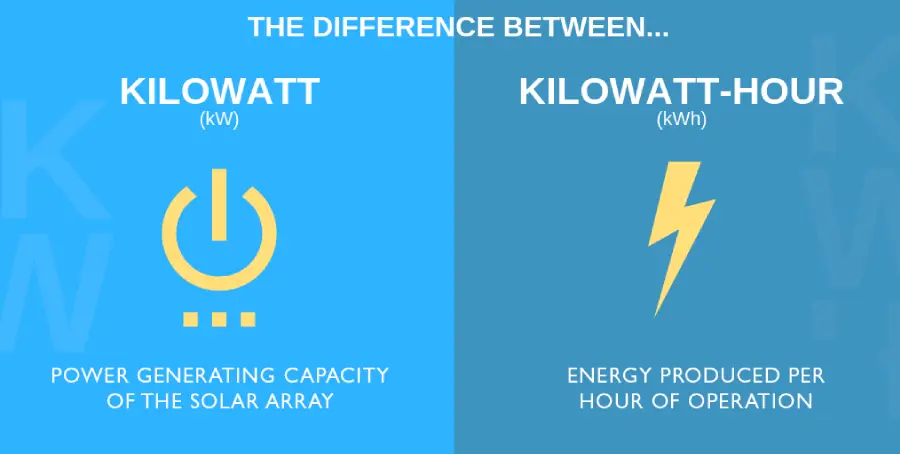
A kWh measures energy used, specifically 1,000 watts running for one hour.Difference between kWh and kW
kW measures instant power use, while kWh measures total energy consumed over time.Calculating appliance energy use
Use (watts × hours) ÷ 1,000 to find kWh consumption and estimate cost.Typical home electricity consumption
Average US homes use about 850 to 900 kWh monthly, influenced by many factors.A kilowatt hour (kWh) is the standard unit your electric utility uses to measure how much electricity you use. One kilowatt hour equals the amount of energy a 1,000-watt appliance uses when it runs for one full hour. It is the number your electric bill multiplies by your rate to work out what you owe each month.
Quick facts
| What a kWh measures | Energy (electricity used over time) |
| Symbol | kWh |
| One kWh equals | 1,000 watts running for one hour |
| Typical US home use | About 850 to 900 kWh per month |
| Typical US rate (2025 to 2026) | Roughly 17 cents per kWh (national average estimate) |
| Often confused with | The kilowatt (kW), which measures power, not energy |
kWh vs kW: energy vs power
People mix these up constantly, but they measure different things. A kilowatt (kW) is a measure of power, or how fast a device draws electricity at any moment. A kilowatt hour (kWh) is a measure of energy, or how much electricity gets used over a stretch of time.
A simple way to keep them straight: think of a car. The kilowatt is like the speed you are driving, and the kilowatt hour is like the distance you actually travel. Your bill charges you for the distance, not the speed, which is why it is measured in kWh.
How to calculate the kWh an appliance uses
The formula is short:
(watts × hours used) ÷ 1,000 = kWh
Say you run a 1,500-watt space heater for three hours. That is 1,500 × 3 = 4,500 watt-hours, and 4,500 ÷ 1,000 = 4.5 kWh. To find the cost, multiply by your rate. At 17 cents per kWh, that heater cost about 77 cents to run for those three hours.
The wattage of most appliances is printed on a label on the device or in its manual, so you can estimate the running cost of anything in your home the same way.
How many kWh does a typical home use?
The average US household uses somewhere around 850 to 900 kWh per month, though the real figure swings widely based on home size, climate, whether you heat with electricity or gas, and how efficient your appliances are. A small apartment uses far less. If you are budgeting for a rental, see our breakdown of the average electric bill for a 1-bedroom apartment, which typically runs on 500 to 750 kWh a month.
Where kWh shows up on your electric bill
Your electric meter records the total kWh flowing into your home. Each billing cycle, the utility takes this cycle’s meter reading, subtracts last cycle’s reading, and the difference is the kWh you used. Modern smart meters send those readings automatically instead of needing a person to visit and read the dials.
On the bill itself, the kWh figure is usually multiplied by a supply rate (the cost of the electricity) and then a separate delivery or distribution charge (the cost of moving that electricity to your home over the grid). Together those make up most of what you pay.
How much does a kilowatt hour cost?
The national average sits around 17 cents per kWh across 2025 and 2026, but where you live changes that dramatically. Low-cost states can fall near 11 cents per kWh, while Hawaii regularly runs above 35 cents. Some providers also use time-of-use pricing, which charges a higher rate during peak evening hours and a lower rate overnight, so the exact same kWh can cost different amounts depending on when you use it.
Simple ways to use fewer kWh
- Swap remaining incandescent bulbs for LEDs, which use a fraction of the power for the same light.
- Unplug chargers and idle electronics, which quietly draw power even when off.
- Run the dishwasher and laundry only with full loads.
- Nudge the thermostat a few degrees when you are asleep or out.
Small habits add up, because every kWh you avoid is one you are not billed for. If you are setting up service for the first time, you may also need to budget for a utility deposit before your first kWh is even metered.
Frequently asked questions
How many kWh does a house use per day? The average US home uses roughly 28 to 30 kWh per day, but daily use rises sharply in extreme heat or cold when heating and cooling run hardest.
How much does 1 kWh cost? Around 17 cents on a national average basis, though it ranges from about 11 cents to over 35 cents depending on your state and provider.
Is a kWh the same as a kW? No. A kW measures power (the rate of use), and a kWh measures energy (the total amount used). Your bill is based on kWh.
How do I find out how many kWh I use? Check your electric bill, which lists your kWh for the cycle, or read your meter at the start and end of a period and subtract.