

Key Moments
Steps to Get a Cashier's Check
Confirm payee, bring ID and funds, visit bank or order online, pay fee, keep receipt.Bank Policies Vary
Major banks have different in-branch and online rules and limits for issuing cashier's checks.Obtaining Without an Account
Non-customers may pay cash at some banks or consider credit unions or money orders.Handling Lost or Stolen Checks
File a loss declaration and possibly buy an indemnity bond to replace lost cashier's checks.A cashier’s check is one of the safest ways to make a large payment, which is why sellers, landlords, and closing agents often ask for one. Getting it is usually a five minute errand once you know what to bring and where to go. This guide walks through the steps, the paperwork, which banks let you order online, and how to get one even if you do not have an account.
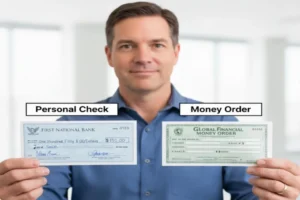
For what a cashier’s check costs and how to get the fee waived, see our companion guide on cashier’s check fees. For how it stacks up against a money order, see cashier’s check vs. money order. This page is part of our types of checks series.
Quick facts
| Question | Answer |
|---|---|
| Where do you get one? | A bank or credit union, in branch or sometimes online |
| Do you need an account? | Usually yes, though some issuers sell to non customers for cash |
| What do you bring? | Government photo ID, exact amount, exact payee name |
| How long does it take? | A few minutes in branch; a few days if ordered online by mail |
| What does it cost? | Often $0 to $20, depending on the bank and account |
| Is there a maximum? | Generally no fixed cap, though online orders may be limited |
How to get a cashier’s check, step by step
1. Confirm the exact amount and payee. The bank prints these onto the check and they cannot be changed afterward, so double check both. For a business, use the full legal name, including any “Inc.” or “LLC,” exactly as the payee expects it.

2. Make sure the funds are in place. The full check amount, plus any fee, has to be available. If you have an account at the bank, the money is pulled from it. If you do not, you will usually need to bring cash.
3. Bring a government photo ID. A driver’s license, state ID, or passport works. The bank needs to verify who you are before it moves the money.
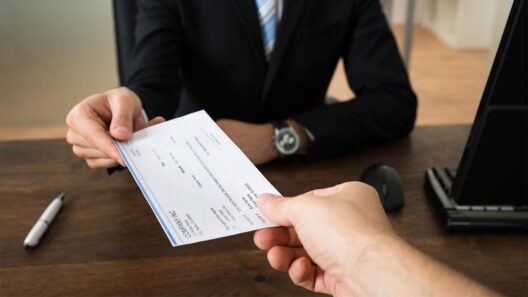
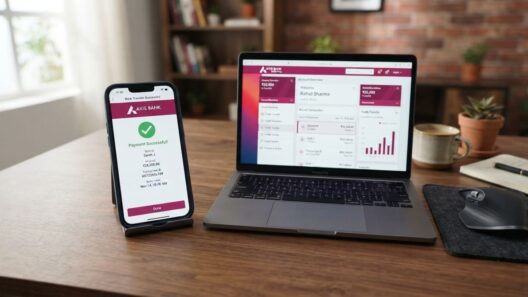
4. Visit a branch or order online. Most people get a cashier’s check from a teller in person, which is the fastest route. Some banks, especially online focused ones, let you order through the website or app and mail it to the recipient, which takes longer.
5. Pay the amount plus the fee. The bank withdraws the total from your account or takes your cash, then prints and signs the check.
6. Get a receipt and keep it. This is the step people skip and regret. The receipt is what lets you trace the check or start a replacement if it is ever lost, so file it somewhere safe.
What each bank requires
The basic process is the same everywhere, but the details differ. Here is how a few major banks handle it, based on their published policies. Confirm with your own bank before you go, since rules change.
| Bank | In branch | Online or app | Notes |
|---|---|---|---|
| Chase | Yes | No | Account holders only; no set maximum |
| Bank of America | Yes | Limited | Account holders |
| Wells Fargo | Yes | Up to $2,000 online | In branch required above $2,000; a monthly per customer limit applies |
| U.S. Bank | Yes | Varies | Account holders |
| Capital One | Café or kiosk | Yes for 360 Checking | Kiosk purchases capped per day at some cafés |
The takeaway: if you need a large cashier’s check, plan to visit a branch. Online ordering tends to be capped at a few thousand dollars and adds mailing time.
How to get a cashier’s check without an account
Most banks issue cashier’s checks only to their own customers, but you have a few paths if you do not have an account.
- Ask a bank that serves non customers. Some banks and credit unions will sell you one for cash plus a valid ID, usually at a higher fee. Call ahead and ask, since policies vary by branch.
- Try a credit union. Credit unions sometimes serve members of other credit unions. If you belong to one, you may be able to use another.
- Open an account. If you will need guaranteed payments regularly, opening a basic checking account can be worth it. Many are free.
- Use a money order instead. For amounts under $1,000, a money order needs no bank account and works for most of the same situations. See cashier’s check vs. money order to decide.
When you will need one
Cashier’s checks show up whenever a personal check will not be trusted and cash is impractical:
- A home closing, where the closing agent may ask for guaranteed funds.
- A security deposit or first month’s rent, since some landlords require guaranteed payment.
- Buying a car or another big ticket item from a private seller.
- Moving your money between banks, for example when you change banks or relocate.
If your cashier’s check is lost or stolen
This is why the receipt matters. To replace a lost cashier’s check, you contact the issuing bank, file a declaration of loss, and often buy an indemnity bond that makes you responsible if the original is later cashed. Even then, banks commonly make you wait, sometimes up to around 90 days, before they reissue or refund. Paying for a surety bond can shorten that wait at some banks. Treat the check like cash and store it carefully.
A quick fraud warning
Cashier’s checks are a favorite tool in overpayment scams. A buyer “accidentally” sends a cashier’s check for too much, then asks you to deposit it and send back the difference. Days later the check is exposed as fake and the bank reverses it, leaving you on the hook. Never send money back against a check you received, and verify any cashier’s check by calling the issuing bank directly, using a number you look up yourself.
Frequently asked questions
How long does it take to get a cashier’s check? In a branch, a few minutes. Ordered online for mailing, a few business days.
Can I get a cashier’s check with cash? Yes. If you do not have an account at the bank, paying in cash is usually how non customers get one, where the bank allows it.
Is there a limit on how much a cashier’s check can be? There is generally no fixed upper limit in branch, as long as you can cover it. Online orders are often capped, for example around $2,000 at some banks.
Can I get a cashier’s check made out to myself? Usually yes, which is a common way to move funds when switching banks. Bring ID and confirm your bank allows it.
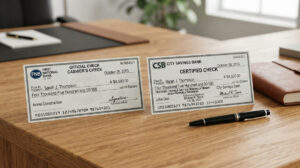
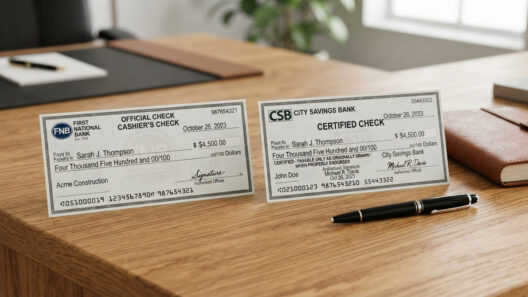
What is the difference between a cashier’s check and a certified check? A cashier’s check is drawn on the bank’s own funds. A certified check is drawn on your account, with the bank verifying and setting aside the funds. See certified check vs. cashier’s check.
Lead Paragraph publishes general information, not financial or legal advice. Bank rules, fees, and limits vary by institution and location and can change, so confirm details with your bank before you rely on them.