
Key Moments
True Cost Factors
Equipment fees, promo expirations, and add-ons significantly raise actual internet bills above advertised rates.Connection Type Impact
Type of internet connection is the main driver of monthly cost and performance.Right-Speed Matching
Choosing speed tiers based on household needs prevents overspending on unnecessary high speeds.Bill Reduction Strategies
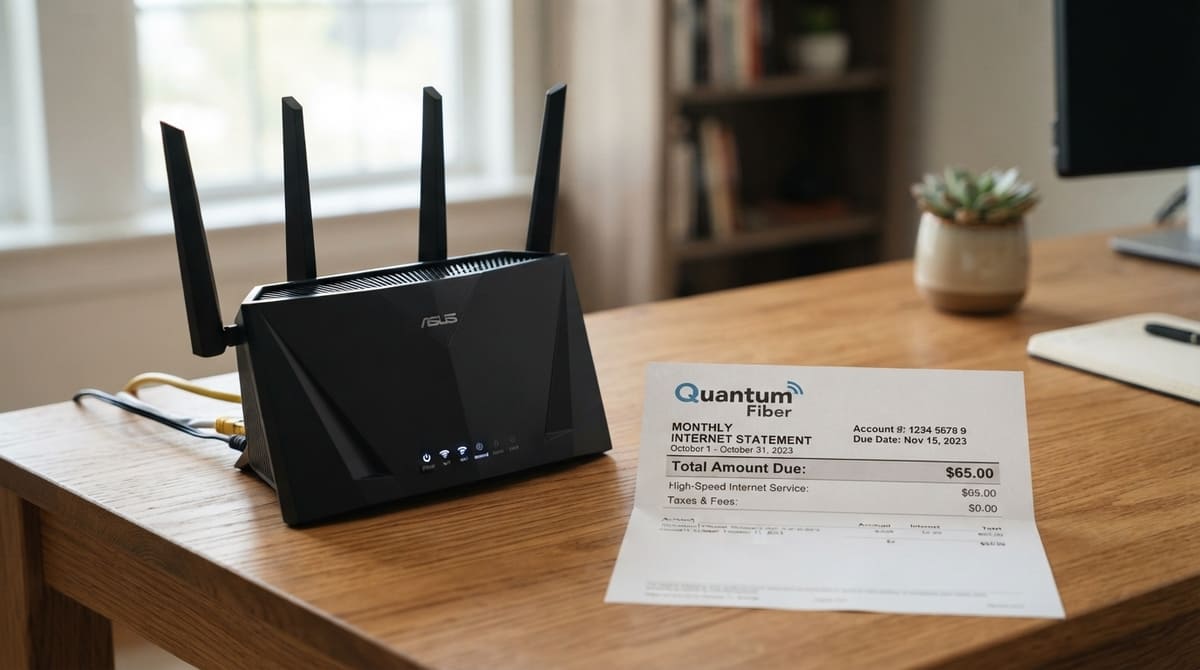
Effective methods to lower bills include checking promos, buying equipment, and shopping competition.The average internet bill in the US runs about $65 to $80 per month once equipment fees and taxes are counted. Advertised plan prices look lower, often $50 to $65, but the number on your statement is usually higher because of modem rental fees, expired promotional pricing, and add-on charges. What you pay mostly comes down to your connection type, your speed tier, and how much competition exists at your address.
Average Internet Bill Quick Facts
| Question | Typical answer |
|---|---|
| Average monthly bill | About $65 to $80 all-in |
| Typical advertised plan price | $50 to $65 |
| Equipment rental fee | $10 to $20 per month |
| Cheapest connection type | Fixed wireless, around $40 to $50 |
| Most expensive connection type | Satellite, often $100 or more |
| Recommended speed for most homes | 300 Mbps or higher |
| Biggest hidden cost | Promo pricing that expires after 12 months |
Figures are typical ranges from national broadband pricing studies. Local pricing varies with competition.
Average Internet Bill by Connection Type
Connection type is the biggest structural driver of price. Roughly, monthly costs stack like this:

| Connection type | Typical monthly cost | Notes |
|---|---|---|
| Fixed wireless (5G home) | $40 to $55 | Often flat pricing, equipment included |
| DSL | $40 to $60 | Cheap but slow, being phased out |
| Cable | $55 to $75 | Widely available, prices climb after promos |
| Fiber | $60 to $90 | Best speed per dollar, upload parity |
| Satellite | $90 to $120+ | Priciest option, mainly for rural areas |
Fiber looks more expensive than cable on paper, but it usually includes equipment and holds its price better after the first year, so the real-world gap is smaller than advertised rates suggest.
Why Your Bill Is Higher Than the Advertised Price
Equipment rental. The modem and router fee adds $10 to $20 per month at many providers. Over a year, that is more than the cost of buying your own compatible modem outright, where allowed.
Promotional pricing expiring. Most cable and fiber deals run 12 months. After that, plans commonly jump $20 to $30 per month without any change in service. A large share of the gap between advertised prices and real bills is simply customers sitting on expired promos.
Data caps and overages. Some providers cap monthly data and charge roughly $10 per extra block of usage. Heavy streamers and remote workers should check for unlimited data before signing.
Taxes, surcharges, and add-ons. Line items like broadcast fees, regulatory recovery fees, and premium wifi add a quiet $5 to $15.
How Much Should You Pay for Internet?
For most households, a reasonable target in 2026 is $50 to $65 per month for a 300 to 500 Mbps plan, all-in. You may pay less where fiber competition is strong, and more in rural or single-provider areas.
Match the speed to your household rather than buying the biggest number:
| Household | Reasonable speed tier |
|---|---|
| 1 to 2 people, streaming and browsing | 100 to 300 Mbps |
| Family with simultaneous streaming and gaming | 300 to 500 Mbps |
| Heavy remote work, large uploads, smart home | 500 Mbps to 1 Gbps |
Paying for gigabit service that a two-person household never touches is one of the most common ways people quietly overspend.
Five Ways to Lower Your Internet Bill
- Check your promo status. If your bill jumped recently, your intro rate likely expired. Call and ask for current new-customer pricing, or be ready to switch. Providers routinely match to keep you.
- Buy your own modem and router. Where the provider allows it, a one-time purchase typically pays for itself within a year of skipped rental fees.
- Right-size your speed. Downgrading from an unused gigabit tier to 300 or 500 Mbps often saves $20 or more per month with no noticeable difference.
- Shop your address once or twice a year. New fiber and 5G home internet buildouts are changing local competition fast, and the best pricing goes to new customers.
- Ask about low-income or bundled pricing. Some providers offer discounted plans by income, and bundling with mobile service can cut the effective rate.
Internet is one of the easier household bills to actually reduce, unlike gas or water where usage sets the floor. For context on your full monthly stack, see our pillar guide on how much utilities cost for an apartment, plus the companion pieces on the average gas bill and the average electric bill for a 1-bedroom apartment.
Average Internet Bill FAQ
How much does internet cost per month for one person?
A single person can usually get suitable speeds for $40 to $60 per month, and sometimes less with 5G home internet or income-based plans.
Is $100 a month too much for internet?
For a standard home plan, usually yes, unless you are on satellite, in a rural single-provider area, or paying for multi-gigabit fiber. Most households at $100 or more are sitting on an expired promo, rented equipment, or an oversized speed tier.
Why did my internet bill go up?
The most common causes, in order: an expired promotional rate, an equipment fee added or increased, a provider-wide price hike, or data overage charges. Compare your latest statement to one from a few months ago line by line.
Is wifi the same as internet on my bill?
Practically, yes. Wifi is just the wireless signal your router creates from the internet service you buy. An average wifi bill is the same thing as an average internet bill, though renting the provider’s wifi gateway adds an equipment fee.
Does internet count as a utility?
It is not a regulated utility like water or gas in most states, but nearly every household now budgets it as one. Renters should note that internet is only occasionally covered in rent. Our explainer on what utilities included means covers what landlords typically pay for.