
Key Moments
Purpose of a Roommate Agreement
Defines shared responsibilities and prevents conflicts by documenting expectations before moving in.Key Components to Include
Specific clauses on rent, utilities, chores, guests, and moving out reduce ambiguity and disputes.Legal Standing
Acts as a private contract with limited enforceability but valuable for clarity and prevention.Maintaining and Updating
Regularly revisiting the agreement ensures continued relevance as household dynamics change.Most roommate problems do not start as big fights. They start as small assumptions: who buys the dish soap, how late is too late for guests, when rent actually needs to hit the account. A roommate agreement takes those assumptions and writes them down before anyone moves a box, so the answer already exists when a question comes up.
This guide covers what a roommate agreement is, what it should include, and how to write one that people will actually follow. A fill-in template is included near the end.
Quick Facts
| Question | Short answer |
|---|---|
| What is it? | A written document where roommates agree on rent, bills, chores, and house rules |
| Who signs it? | Every person living in the unit, ideally before move-in |
| Is it the same as a lease? | No. The lease is between you and the landlord. This is between roommates. |
| Is it legally binding? | It can be treated as a private contract, but enforcement varies. Use it mainly to set clear expectations. |
| How long does it take? | 30 to 60 minutes to draft and sign together |
| Cost? | Free if you write your own |
What Is a Roommate Agreement?
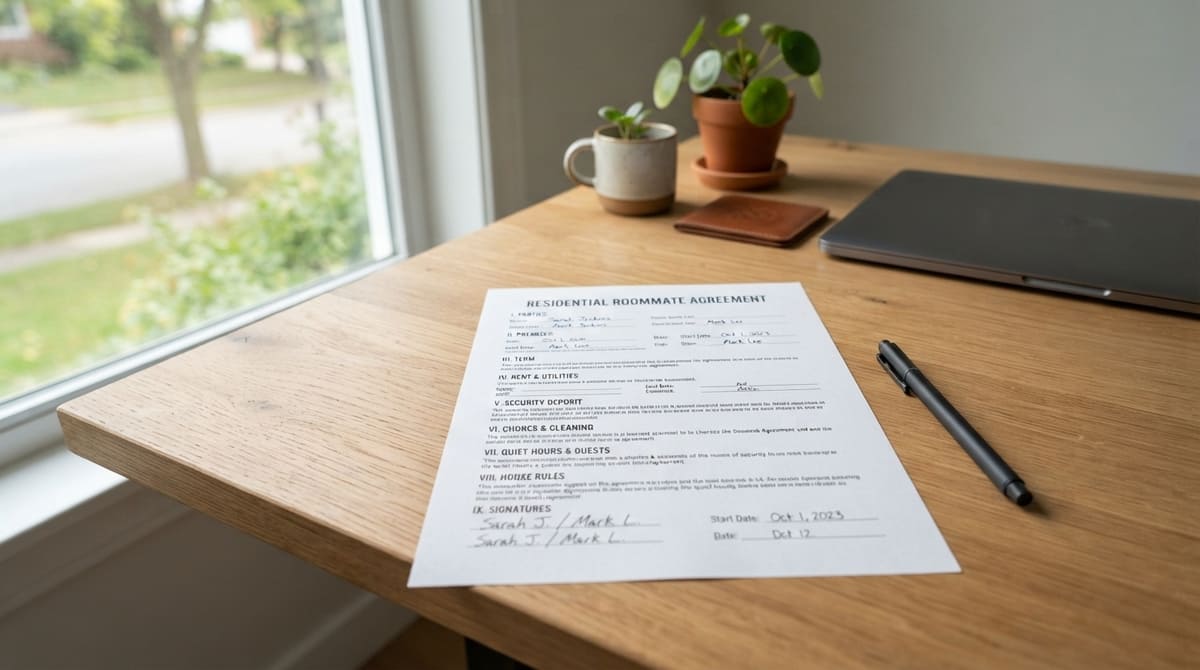
A roommate agreement is a document that spells out how the people sharing a home will split money and responsibilities and handle day-to-day living. It records who pays what, when payments are due, how shared spaces work, and what happens if someone moves out early.


It is not the same as your lease. The lease is the legal contract with your landlord that determines who is responsible for the rent as a whole. The roommate agreement sits underneath that. It divides responsibilities between roommates and gives you a shared reference point when memories start to differ. If you are still house hunting, our guide on how to rent an apartment walks through the lease side of the process.
Is a Roommate Agreement Legally Binding?
A signed roommate agreement can function as a private contract between the people who signed it, which means it may carry some weight if a dispute ever reaches small claims court. In practice, though, its real value is prevention. A clear written agreement stops most disagreements before they escalate, because everyone already agreed to the terms in a calm moment rather than an angry one.
Keep in mind that a roommate agreement does not override your lease. If the lease names you as responsible for rent, your landlord can still pursue you for the full amount regardless of what your roommates promised each other. That gap is exactly why the money sections below matter so much.
What to Include in a Roommate Agreement
The strongest agreements are specific. Vague language like “everyone keeps things clean” invites arguments. Concrete language like “kitchen counters wiped and dishes done the same night” does not. Cover each of the areas below.
Rent and Payment
State the total rent, each person’s share, the due date, and how payment is collected. Decide who sends the full amount to the landlord and how the others pay that person. Add what happens if a payment is late. For a deeper walkthrough, see what to do when a roommate is not paying rent.
Utilities and Shared Bills
List every recurring bill: electricity, gas, water, internet, trash, streaming subscriptions. Note whose name each account is in and how the cost is divided. Splitting evenly is simplest, but you can weight it by room size or usage if that feels fairer. If you are setting up accounts for the first time, our guide on transferring utilities when you move covers the basics.
Security Deposit
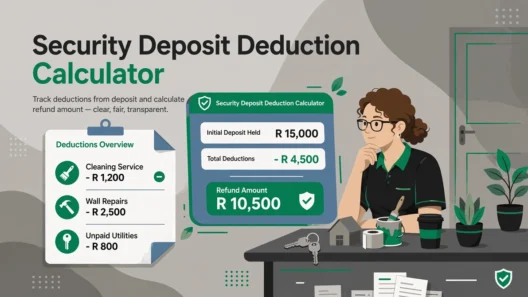
Record how much each person contributed to the deposit and how it will be returned when someone leaves. Deposits cause a surprising number of move-out arguments, so it helps to agree in advance on how damage costs are assigned. Our explainer on the security deposit covers how landlords typically handle returns and deductions.
Chores and Cleaning
Assign specific tasks or set a rotation. Define the standard (“trash out on collection day,” not “take out the trash sometimes”) and how often each task happens. Ambiguity here is the single most common source of roommate friction.
Guests and Overnight Visitors
Set expectations for how often guests can stay, how long an overnight guest can remain before it becomes a conversation, and whether guests can use shared spaces freely. A romantic partner who is around every night is the classic flashpoint, so name it directly.
Quiet Hours and Shared Spaces
Agree on quiet hours for weekdays and weekends, noise expectations, and how shared spaces like the living room and kitchen are used. Include thermostat settings if that tends to be contested.
Food and Supplies
Decide whether groceries are shared or separate, and how shared staples like paper towels, dish soap, and cleaning supplies get bought and split. Many households keep food personal and split only communal supplies.
Moving Out and Notice
State how much notice a roommate must give before leaving, who is responsible for finding a replacement, and how that person’s share of rent and the deposit is handled. If replacing a roommate means changing the lease, read adding a roommate to a lease for how that works with the landlord.
Handling Disputes
Include a simple process for disagreements, such as a monthly house check-in or a rule that issues get raised directly rather than through passive notes. Having any agreed process beats having none.
How to Write a Roommate Agreement Step by Step
- Talk it through together. Sit down as a group and walk through each category above. The conversation matters as much as the document.
- Write in plain, specific language. Avoid vague words. Numbers and clear standards prevent reinterpretation later.
- Cover money first. Rent, bills, and the deposit cause the most conflict, so give them the most detail.
- Read it out loud together. This catches anything one person understood differently.
- Everyone signs and dates it. Each roommate keeps a copy, digital or printed.
- Revisit it when things change. A new roommate, a new pet, or a new work schedule is a reason to update and re-sign.
Free Roommate Agreement Template
Copy the outline below, fill in your details, and have every roommate sign.
ROOMMATE AGREEMENT

Address: _______________________________________
Date: __________________________________________
Roommates: ____________________________________

1. RENT
   Total monthly rent: $________
   Each roommate's share: ______________________
   Due date: ______  Paid to: ________________
   Late payment: _______________________________

2. UTILITIES AND SHARED BILLS
   Bill / Account holder / Split:
   - Electricity: ______ / ______
   - Gas: ______ / ______
   - Water: ______ / ______
   - Internet: ______ / ______
   - Other: ______ / ______

3. SECURITY DEPOSIT
   Amount paid by each roommate: _______________
   Return process on move-out: _________________

4. CHORES
   Task / Assigned to / Frequency:
   _____________________________________________

5. GUESTS
   Overnight guest rules: ______________________

6. QUIET HOURS
   Weekdays: ______   Weekends: ______

7. FOOD AND SUPPLIES
   Groceries: shared / separate
   Shared supplies split: ______________________

8. MOVING OUT
   Notice required: ______
   Replacement responsibility: _________________

9. DISPUTES
   How issues are raised: ______________________

Signatures:
_______________________  Date: ______
_______________________  Date: ______
Tips to Make the Agreement Actually Stick
An agreement only works if people treat it as real. Sign it before move-in, while everyone is still on their best behavior and motivated to be fair. Keep it somewhere visible or shared. Schedule a short monthly check-in so small issues get handled before they grow. And update it whenever the household changes, because an outdated agreement is easy to ignore.
For choosing the right person before any of this comes up, see our list of questions to ask a potential roommate. For the bigger picture on sharing a home well, start with our guide to living with roommates.
Frequently Asked Questions
Do I really need a roommate agreement if we are friends? Yes, and arguably more so. Money disagreements strain friendships fast, and a written agreement keeps expectations clear so the friendship does not become the casualty.
Can a roommate agreement be handwritten? Yes. A handwritten and signed agreement is valid as a record of what everyone agreed to. A typed version is just easier to read and copy.
What if a roommate refuses to sign? Treat that as useful information before you commit to living together. A person who will not agree to basic shared expectations in writing may be difficult to live with when a real issue arises.
Does a roommate agreement replace the lease? No. The lease with your landlord controls your legal obligations for the unit. The roommate agreement only governs the arrangement between roommates.
How often should we update it? Whenever the household changes, such as a new roommate moving in, a pet joining, or a major change in who pays what.