
Key Moments
Speed and Cost Differences
ACH transfers take 1-3 business days and are low-cost; wires are faster but more expensive.Reversibility of Transactions
ACH transfers can sometimes be reversed for errors or fraud, but wire transfers generally cannot.Best Use Cases
Use ACH for payroll and routine payments; use wires for large, urgent, or international payments.Cutoff Times and Limits
Both ACH and wires have cutoff times and transfer limits that affect processing.Most guides on ACH versus wire transfers are written for businesses. If you are just trying to pay rent, receive a paycheck, or send a down payment, here is the plain version: an ACH transfer is the cheap, everyday way to move money between US bank accounts, and a wire transfer is the fast, pricier option for large or urgent payments. The right choice comes down to speed, cost, and whether you can get the money back.
This page is part of our types of checks and payments series.
Quick facts
| ACH transfer | Wire transfer | |
|---|---|---|
| Speed | Usually 1 to 3 business days | Minutes to same or next business day |
| Cost | Often free, sometimes a few dollars | Around $25 to $35 domestic, $35 to $50 international |
| Reach | US accounts | Domestic and international |
| Reversible? | Sometimes, for errors or fraud | Generally no, once sent |
| Best for | Payroll, bills, routine transfers | Large, urgent, or international payments |
What an ACH transfer is
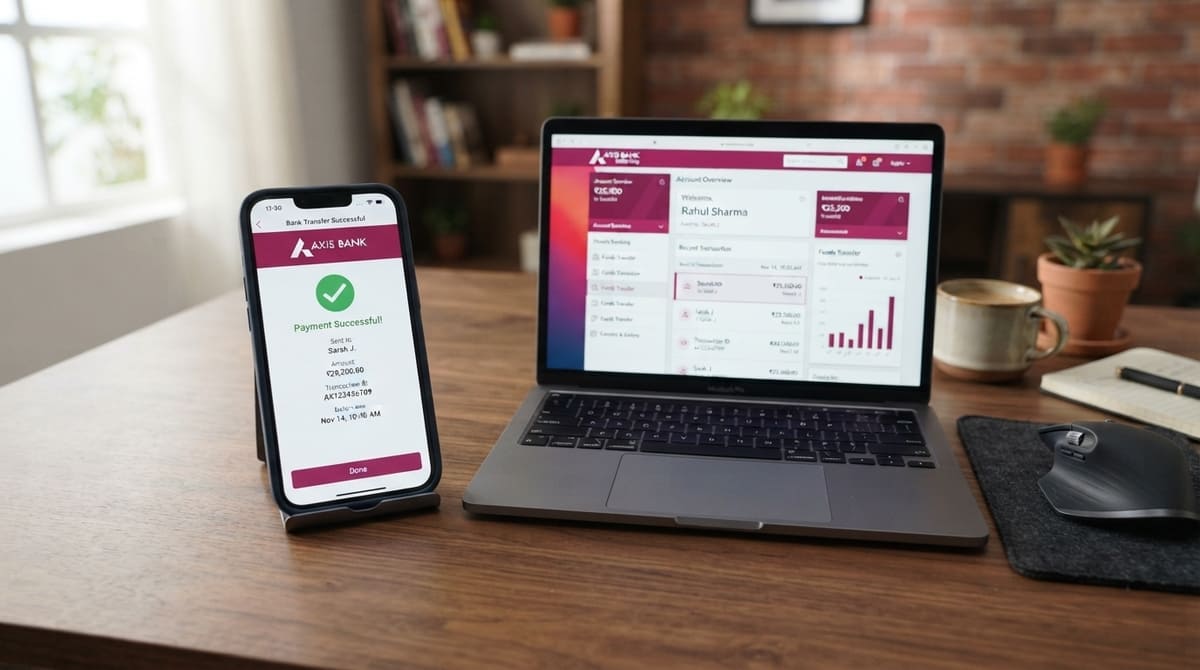
ACH stands for Automated Clearing House, the network that moves money between US bank accounts in batches. You already use it constantly, usually without thinking about it. Direct deposit of your paycheck, automatic bill pay, subscription charges, and transfers between your own accounts all run on ACH. Many payment apps route through it too.


Because ACH batches transactions and processes them in scheduled windows, it is not instant. A transfer typically clears in one to three business days, though many banks now offer same day ACH for an extra fee. The upside is cost: ACH is often free for consumers, or just a small charge.
What a wire transfer is
A wire transfer moves money directly from one bank to another, without the batching. You set it up through your bank, the funds leave your account, and the receiving bank is paid, often within minutes for domestic wires and usually the same or next business day. International wires can take one to two business days.
That speed costs money. Domestic wires commonly run about $25 to $35, and international wires can reach $50, sometimes with a fee on the receiving end too. Wires also work worldwide, which ACH does not.
The difference that matters most: you cannot undo a wire
This is the single most important distinction for an everyday user. Once a wire transfer is sent and settled, the money is generally gone. There is no built in reversal. ACH transfers, by contrast, can sometimes be reversed when there is a clear error or fraud, within defined rules.
That is why wire transfers are the favorite tool of scammers. If someone is pressuring you to wire money urgently, treat it as a red flag and slow down. For a large wire like a home down payment, always confirm the recipient’s bank details by phone using a number you already trust, never one sent to you by email. Our guide to closing on a house covers where wires fit into a purchase, and our coverage of common payment scams shows how wire fraud usually unfolds.
Which should you use?
Match the method to the situation:
- Getting paid by an employer: ACH, as direct deposit. It is automatic and free.
- Paying rent or recurring bills: ACH autopay. Cheap, hands off, and reversible if something goes wrong.
- Sending money to a friend or family member: ACH through a bank transfer or payment app is usually fine and free. Use a wire only if it is large and urgent.
- A home down payment or closing costs: a wire, because it is fast and the funds are guaranteed at settlement. Verify the details carefully first.
- Paying an international vendor or relative abroad: a wire, since ACH does not cross borders.
- Any large, time sensitive payment: a wire, accepting the fee for speed and certainty.
Cutoff times catch people out
Both methods run on the bank’s schedule, not the clock. Wires and same day ACH have daily cutoff times, often in the early afternoon. Submit after the cutoff, or on a weekend or holiday, and the transfer waits until the next business day. If timing is tight, ask your bank about its cutoff before you send.
A note on limits
ACH transfers usually have daily or monthly caps set by your bank, which can still be quite high for consumers. Wires are better suited to very large one time amounts. If a payment is bigger than your ACH limit and cannot wait, a wire is often the practical choice.
Frequently asked questions
Is ACH the same as a wire transfer? No. Both move money electronically, but ACH is batched, slower, and cheap, while a wire is direct, fast, and more expensive. They also use different networks.
Which is safer, ACH or wire? ACH is generally safer for the sender because it can sometimes be reversed for errors or fraud. A wire is hard to claw back once sent, so verify details carefully.
Is a bank transfer a wire transfer? Not necessarily. “Bank transfer” is a broad term. Most everyday bank transfers are actually ACH. A wire is a specific, faster, costlier type.
How long does each take? ACH usually takes one to three business days. A domestic wire often completes within minutes to the same business day if sent before the cutoff.
Can I reverse a wire transfer? Generally no, once it settles. That is why extra caution matters for large wires.
Lead Paragraph publishes general information, not financial or legal advice. Fees, speeds, and limits vary by bank and can change, so confirm details with your bank before you send.