
Key Moments
Choose Your Offer Price
Use recent comparable sales and market conditions to decide a competitive price.Set Terms and Contingencies
Include protections like inspection and financing contingencies to manage risks.Submitting a Written Offer
A formal, signed offer includes price, contingencies, earnest money, and requests.Negotiation and Seller Response
Expect acceptance, rejection, or counteroffer, and negotiate within your limits.You have found a home you love, and now comes the moment that turns a casual viewing into a real purchase: making an offer. It can feel high-stakes, but the process follows a clear sequence, and knowing the steps in advance takes a lot of the pressure off.
This guide walks through how to make an offer on a house, from settling on your number to what actually goes into the offer and what happens once you submit it.
What “making an offer” actually means
An offer is a formal proposal to buy a home at a specific price and under specific terms. It is not just a number; it is a structured document, usually prepared with your real estate agent, that the seller can accept, reject, or counter.


Making an offer typically happens once you have viewed a home, decided you want it, and are pre-approved for financing (if you are using a mortgage). It is the point where the process shifts from browsing to negotiating. For where this fits in the larger picture, see our home buying process steps guide.
Step 1: Decide on your offer price
The first decision is how much to offer. Your agent usually helps here by looking at comparable recent sales in the area, often called “comps,” to gauge what the home is realistically worth.
Several factors shape the number you land on:
- Recent comparable sales: what similar nearby homes actually sold for.
- The local market: in a hot market you may need to offer at or above asking; in a slower one there may be room below.
- How long the home has been listed: a property sitting for a while may invite a lower offer.
- Your budget: your offer should stay within what you are comfortable with and what your financing supports.
There is no universal formula. The right number balances the home’s value, the competition, and your own limits.
Step 2: Decide on your terms and contingencies
Price is only part of an offer. The terms matter just as much, and contingencies are a key part of them. A contingency is a condition that must be met for the sale to go through, and common ones include:
- Inspection contingency: lets you back out or renegotiate if the home inspection turns up significant problems.
- Financing contingency: protects you if your mortgage does not come through.
- Appraisal contingency: addresses what happens if the home appraises for less than your offer.
Contingencies protect you, but in competitive markets some buyers reduce or waive certain ones to make their offer more appealing. That comes with added risk, so it is a tradeoff worth understanding rather than rushing.
Step 3: Decide on your earnest money
Earnest money is a deposit you include with your offer to show the seller you are serious. It is typically held in an account and later applied toward your purchase costs if the sale goes through.
The amount varies, but it signals commitment. If you back out for a reason not covered by a contingency, you may forfeit this deposit, which is part of why it reassures sellers.
Step 4: Put the offer in writing
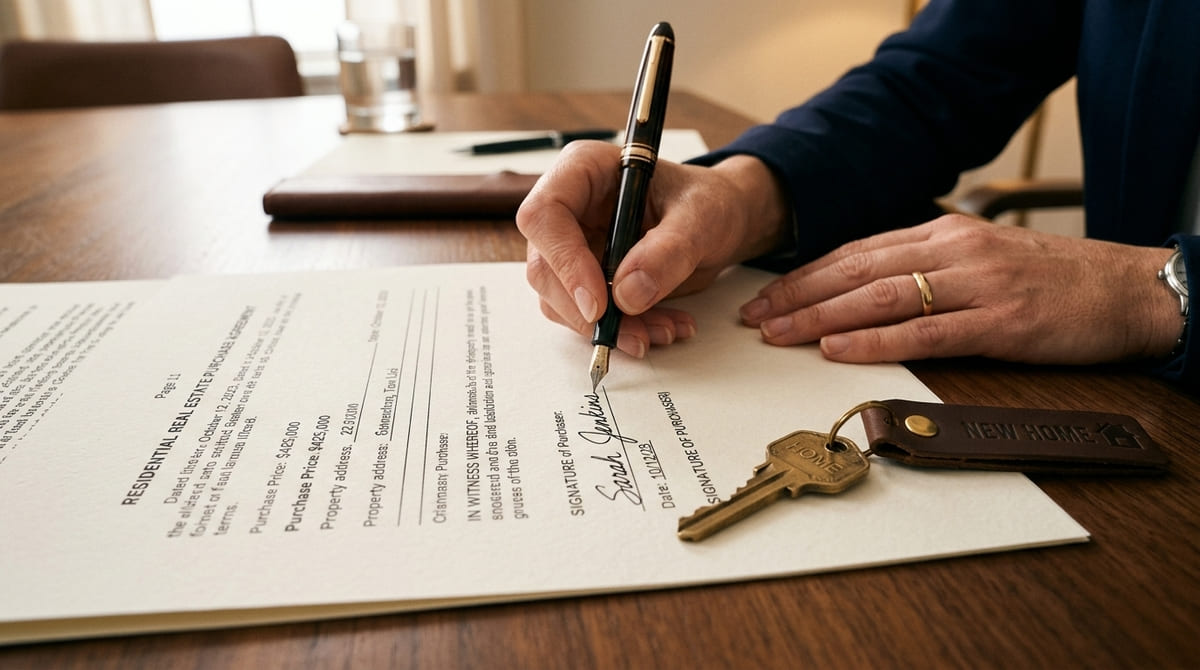
Offers are made in writing, and your agent typically prepares the paperwork. A written offer generally includes:
- The price you are offering
- Your contingencies
- Your earnest money amount
- Your proposed closing timeline
- Any requests, such as the seller covering certain costs or including specific appliances
You review and sign it, and it becomes a formal proposal ready to send to the seller.
Step 5: Submit the offer
Your agent submits the offer to the seller’s agent. From here, the ball is in the seller’s court. Depending on the market and the home, you might be one of several buyers making offers at the same time, or the only one.
Once submitted, the waiting begins, though responses often come within a day or two.
Step 6: Wait for the seller’s response
The seller has three basic options:
- Accept: they agree to your offer as written, and you move toward a purchase agreement.
- Reject: they decline, which can happen in competitive situations or if the offer is far from their expectations.
- Counter: they propose different terms, most often a different price. This is very common and opens a round of negotiation.
A counteroffer is not a no. It is an invitation to keep talking, and a few rounds of back-and-forth are normal before both sides agree.
Step 7: Negotiate if needed
If the seller counters, you can accept their counter, counter back, or walk away. This is where your earlier preparation pays off: knowing your maximum number and which terms matter most to you keeps the negotiation grounded.
Once both sides agree on price and terms and sign, you are “under contract,” and the home buying process moves into the inspection, appraisal, and closing stages.
Frequently asked questions
How much should I offer on a house? There is no fixed rule. Your offer should reflect comparable recent sales, current market conditions, how long the home has been listed, and your own budget. Your real estate agent can help you analyze comparable sales to arrive at a competitive but sensible number.
Can you offer below asking price? Yes. Whether it is wise depends on the market. In a slower market or for a home that has been listed a while, a below-asking offer may be reasonable. In a competitive market, it may not be taken seriously, and offers at or above asking are sometimes needed.
What is earnest money? Earnest money is a deposit included with your offer to show the seller you are serious. It is typically applied toward your purchase if the sale closes, and may be forfeited if you back out for a reason not protected by a contingency.
What happens after my offer is accepted? Once accepted, you move under contract and into the next stages: the home inspection, the appraisal, underwriting, a final walkthrough, and closing. See our home buying process steps guide for the full sequence.
Can a seller reject my offer without countering? Yes. A seller can accept, reject, or counter. A flat rejection is more common in competitive situations or when an offer is far below expectations, but a counteroffer is the more typical response when there is room to negotiate.
The bottom line
Making an offer on a house comes down to deciding your price, setting your terms and contingencies, including earnest money, putting it in writing, and submitting it, then negotiating until both sides agree. Preparation is what makes it manageable: know your number, understand which terms protect you, and decide your limits before you start. With that groundwork, the offer stage becomes a clear step rather than a nerve-wracking guess.
For how this fits into the whole journey, see our home buying process steps guide or our complete first-time home buyer guide.