
Key Moments
Understanding Rental Scams
Rental scams involve misrepresenting properties or ownership to extract money from renters.Common Scam Types
Hijacked listings, phantom rentals, and sales-listed homes are typical rental scams.Warning Signs
Below-market rent, no tours, fast payment pressure, and untraceable payments signal scams.Avoidance Strategies
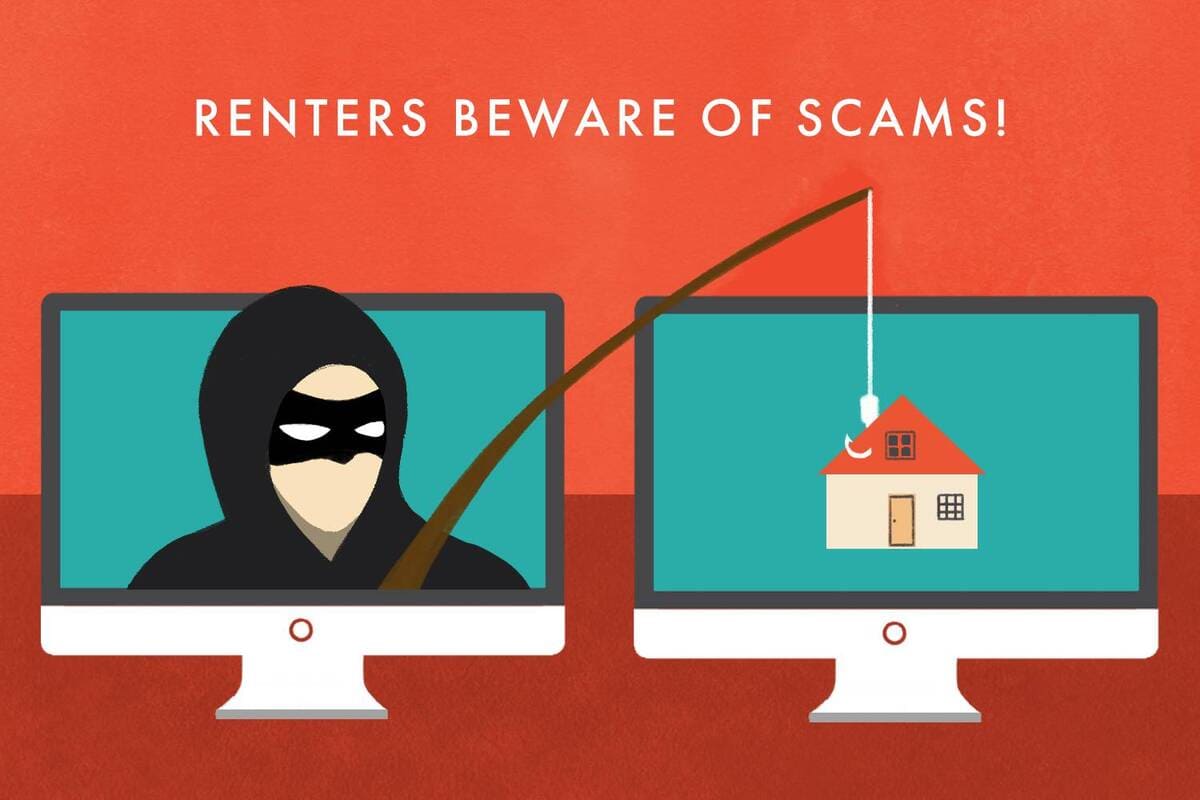
Verify property, tour before paying, confirm landlord identity, and avoid wire or gift-card payments.Rental scams turn the search for a home into a trap. Scammers post listings for places that don’t exist, aren’t for rent, or aren’t theirs, then pressure you into paying a deposit before you can find out. The scale is significant: the Federal Trade Commission reports that people lost about $65 million to rental scams between 2020 and mid-2025, with a median loss of $1,000, and most scams are never reported at all. This guide covers how rental scams work, the red flags that give them away, and how to protect yourself.
Quick facts: rental scams at a glance
| Detail | What to know |
|---|---|
| Reported losses | About $65 million from 2020 to mid-2025 (FTC) |
| Median loss | Around $1,000 per victim |
| Top platform | Facebook, followed by Craigslist |
| Core bait | Below-market rent and attractive photos |
| The tell | A deposit demanded before you can tour the unit |
What is a rental scam?
A rental scam is any scheme in which someone misrepresents a property or their authority over it to collect money from a would-be renter. Sometimes the property doesn’t exist; sometimes it’s real but already occupied, for sale, or listed without the owner’s knowledge. The scammer’s goal is to get you to pay an application fee, deposit, or first month’s rent before you realize there’s no home waiting for you.
Common types of rental scams
Hijacked listings
Scammers copy the photos and description from a real listing, swap in their own contact details, and repost it elsewhere. When you reach out, you’re talking to the scammer, not the real owner.

Phantom rentals
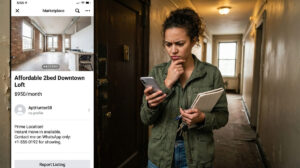
Here the listing is invented from scratch, complete with appealing photos and a low price, for a property that isn’t actually available or doesn’t exist as described.
Already-for-sale homes
A scammer finds a home listed for sale, then advertises it as a rental. If you discover the same address listed for sale under a different name, that’s a major red flag.
Application-fee and deposit scams
The scammer pressures you to pay an application fee, deposit, or rent before you’ve seen the place or signed a proper lease, then disappears once the money is sent.
How to spot a rental scam
Rental scams vary, but they share a recognizable set of warning signs. Watch for these:
- Rent well below the market. A price that seems too good to be true usually is.
- You can’t tour the unit. The “landlord” claims to be out of town, overseas, or otherwise unable to show it in person.
- Pressure to pay fast. Urgency to “hold” the place is designed to stop you from verifying.
- Untraceable payment demands. Requests for wire transfers, gift cards, cryptocurrency, or payment apps before a viewing.
- The listing appears elsewhere. The same photos under different names, prices, or as a home for sale.
- No lease, or an incomplete one. A missing or vague lease leaves you with no protection.
- Requests for money before a signed lease. Legitimate landlords don’t collect deposits before you’ve seen the unit and signed.
How to avoid rental scams
- Search the address and the photos. Confirm the property exists, isn’t listed for sale, and the images aren’t reused elsewhere.
- Always tour before paying. See the unit in person, or send someone you trust if you can’t be there.
- Verify the landlord or manager. Check public property records to confirm you’re dealing with the real owner or a legitimate agent.
- Never wire money or send gift cards. Use traceable payment methods, and only after verifying everything and signing a lease.
- Slow down. A legitimate landlord will give you time to check. Pressure is a tactic.
- Research the name. Search the owner or company with words like “scam,” “complaint,” or “review.”
Scams by platform
The same scam looks a little different depending on where you’re searching:
- Facebook Marketplace rental scams — the most reported source, where fake profiles and payment apps dominate.
- Craigslist rental scams — the second-most reported, known for stolen photos and absent landlords.
- Zillow rental scams — how fraud slips onto even a trusted platform.
What to do if you’ve been scammed
If you’ve encountered a rental scam, report the listing to the platform where you found it and file a report with the FTC at ReportFraud.ftc.gov. If you paid by wire, gift card, or a payment app, contact your bank or the service immediately, though recovery can be difficult. You can also report to your state attorney general and local law enforcement. Reporting helps get fraudulent listings removed before they reach the next renter.
Frequently asked questions
How do I know if a rental listing is a scam? Look for the pattern: below-market rent, a landlord who won’t show the unit, pressure to pay fast, and requests for untraceable payment before you’ve toured the place or signed a lease.
What should I do before paying a deposit? Tour the unit, verify the landlord owns or manages the property, and sign a complete lease. Never pay a deposit for a place you haven’t seen.
Which platform has the most rental scams? The FTC reports that Facebook is the most common source, followed by Craigslist, though scams appear on every platform.
How do I report a rental scam? Report it to the platform and to the FTC at ReportFraud.ftc.gov, and consider notifying your state attorney general.
Search and rent with confidence
Knowing the warning signs lets you move quickly on real listings and walk away from fake ones. When you’ve found a place that checks out, our guide on how to rent an apartment covers doing it right from application to lease. And the same caution applies well beyond housing, including job scams that use the very same pressure tactics.
This article is for general informational purposes only. If you believe you’ve encountered a rental scam, report it to the platform and to the FTC at ReportFraud.ftc.gov.