
Key Moments
Identifying Rogue Movers
Recognize deceptive tactics like lowball quotes, large deposits, and unmarked trucks.Understanding the Hostage Load Scam
Rogue movers load belongings then demand inflated fees before delivery.How to Verify Moving Companies
Use FMCSA registration, get binding written estimates, and check reviews.Reporting a Moving Scam
Document incidents and report to FMCSA, DOT, state agencies, and FTC.Most moving companies are legitimate. But a dishonest minority, known as rogue movers, run a scam that can cost you thousands and, in the worst cases, your belongings. The playbook is consistent: win your business with a suspiciously low quote, load your things onto the truck, then demand far more money before they’ll hand them back. Knowing the warning signs before you book is the best protection. Here is how rogue movers operate and how to vet a company.
Quick facts: rogue mover red flags
| Red flag | What it signals |
|---|---|
| Quote given sight-unseen over the phone | Legitimate movers estimate after seeing your belongings |
| Large deposit or cash-only demand | Reputable movers ask for little or nothing upfront |
| No written binding estimate | Without it, the price can balloon on moving day |
| Not registered with the FMCSA | Interstate movers are legally required to be |
| Unmarked rental truck on moving day | A sign of a fly-by-night operation |
| No “Your Rights and Responsibilities” booklet | Federal law requires movers to provide it |
What is a rogue mover?
A rogue mover is a company or operator that uses deceptive practices to overcharge customers or hold their belongings for ransom. Some are outright criminals; others are unlicensed operators cutting corners. According to the Better Business Bureau, movers drew more than 100,000 inquiries and hundreds of complaints in a single recent year, with victims of moving scams reporting an average loss of several hundred dollars, and losses are likely higher because much fraud goes unreported.
How the scam works
The classic rogue-mover scam starts with a lowball quote over the phone, often well below competitors, with a promise that everything is included. Because they never inspect your belongings, the estimate is meaningless. Once your possessions are loaded, the leverage shifts entirely to them.

The hostage load
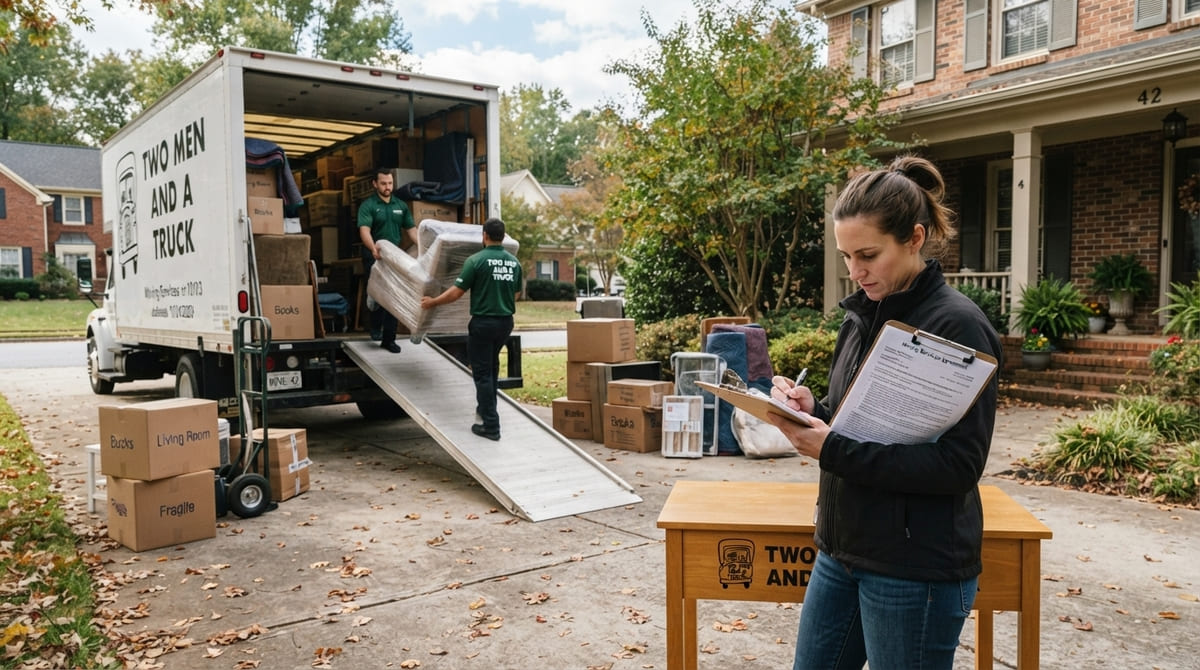
This is the signature move. After the truck is loaded, the mover announces the price has jumped, say from $5,000 to $7,000, citing extra time, added weight, or invented fees. If you don’t pay, they keep your belongings, and some go on to auction or sell them. By the time it happens, your things are already on the truck, which is exactly the position the scam is designed to create.
Broker confusion
Some operations are brokers, not carriers, meaning they sell your job to another company for fulfillment. That isn’t inherently a scam, but rogue brokers may hand your move to an unvetted carrier. Always ask whether the company will perform the move itself or broker it out.
Red flags of a moving scam
- A phone or online quote with no inspection. A legitimate mover surveys your belongings in person or by video before estimating.
- A large upfront deposit or cash demand. A small deposit can be normal, but big deposits or cash-only terms are a warning sign.
- No binding written estimate. Get the price, dates, and terms in writing before anything is loaded.
- No FMCSA registration. Interstate movers must be registered with the Federal Motor Carrier Safety Administration.
- A generic phone greeting. Answering with “Movers” instead of a company name suggests a shell operation.
- No physical address or online history. Legitimate companies have a verifiable presence.
- Blank documents to sign. Never sign paperwork with empty fields for price or terms.
- An unmarked rental truck arrives. Professional movers use marked, equipped trucks.
How to vet a moving company
- Check FMCSA registration. For interstate moves, verify the company’s DOT and MC numbers and look up its record on the FMCSA’s tools at protectyourmove.gov.
- Get multiple written estimates. Compare quotes and be wary of any that’s dramatically lower than the rest.
- Insist on a binding estimate. A binding estimate locks in the price you agreed to.
- Read the reviews and complaint history. Search the company name with “scam” or “complaint,” and check the BBB.
- Confirm they’ll do the move. Ask directly whether they’re a carrier or a broker.
- Pay by credit card when possible for fraud protection, and never hand over a large cash deposit.
What to do if you’re scammed
If a mover holds your belongings hostage or defrauds you, document everything and report it. For interstate moves, file with the FMCSA’s National Consumer Complaint Database and the U.S. Department of Transportation; for in-state moves, contact your state enforcement agency. You can also report to the FTC at ReportFraud.ftc.gov. Keep all contracts, payment records, and communications, which are essential if you need to pursue a claim.
Frequently asked questions
What is a rogue mover? A moving operator that uses deceptive tactics, such as a lowball quote followed by inflated charges, to overcharge you or hold your belongings for ransom.
What is the hostage load scam? After loading your belongings, the mover demands more money than quoted and refuses to deliver until you pay. It’s the most common and damaging moving scam.
How do I check if a moving company is legitimate? For interstate moves, verify the company’s registration and DOT number through the FMCSA at protectyourmove.gov, get a binding written estimate, and review its complaint history.
How do I report a moving scam? File with the FMCSA’s National Consumer Complaint Database and the DOT for interstate moves, your state agency for local moves, and the FTC at ReportFraud.ftc.gov.
Plan a safe, scam-free move
Vetting your mover is one piece of a smooth relocation. Budget realistically with our breakdown of how much movers cost so a lowball quote stands out immediately, and see our full guide on how to move for the rest of the process. The same verify-first instinct protects you elsewhere, including in rental scams when you’re lining up your next place.
This article is for general informational purposes only. If you believe you’ve encountered a moving scam, report it to the FMCSA, the DOT, and the FTC at ReportFraud.ftc.gov, and contact your bank or card issuer if you paid a scammer.