
Key Moments
Rates Stabilize Nationally
National street rates have flattened after a mild decline with expectations of modest growth.Construction and Supply Easing
New supply is declining, reducing oversupply pressures across the industry.Local Market Variations
Performance varies sharply by city, with undersupplied areas gaining and oversupplied regions declining.Technology Boosts Competitiveness
AI pricing and smart tech adoption help smaller operators compete with large REITs.After two years of supply-driven pressure, the self-storage industry in 2026 reads as a market in stabilization, not crisis. National street rates have flattened after a long, mild decline, the construction wave is finally receding, and the story has become intensely local: undersupplied coastal and Midwestern cities are holding firm while overbuilt Sun Belt metros keep working off excess inventory. Here are the trends that matter, with the latest figures.
For the practical context, this pairs with how to start a self storage business and the returns picture in is a self storage business profitable.
| Quick facts (2026) | |
|---|---|
| National street rate | Around $131 per month, roughly flat after a mild decline |
| 10×10 unit (non-climate) | About $119 per month |
| New supply | Roughly 2.4% of stock, down from 3.0% in 2025 |
| Institutional occupancy | Often 84% to 93% |
| Independent occupancy | Closer to 82% on average |
| Market theme | Stabilization, with sharp local divergence |
1. Rates have stopped falling
After a long, mild slide, pricing is flattening. National street rates sat around $131 per month in spring 2026, roughly flat month-over-month and down about 2.2% year-over-year, with the softening losing momentum rather than accelerating. The post-pandemic correction (after the extraordinary 20% to 40% single-year jumps of 2020 to 2022) looks like a return to normal, not a collapse. Analysts broadly describe 2025 as the trough, with modest upside expected through 2026.


2. Supply is finally easing
The biggest headwind for operators, oversupply, is receding. New construction is projected at about 2.4% of total stock in 2026, down from 3.0% in 2025 and well below the long-term average of 4.2%. Deliveries are peaking in 2026 and then expected to decline into 2027 and 2028. Tighter lending, higher construction costs, and zoning friction are all curbing new development. For owners of existing facilities, a shrinking pipeline is bullish for values.
3. The market is intensely local
The national average hides enormous variation. In one recent month, undersupplied Boston led rent growth at nearly 10% year-over-year on critically low supply, while oversupplied Santa Rosa posted the sharpest decline at about the same magnitude. Among the 150 largest cities, roughly three-quarters saw annual rate decreases and a quarter saw gains. The lesson for anyone building or buying: a facility opening three miles away affects you far more than any national forecast. Local supply is the number that matters, which is exactly what a feasibility study is for.
4. Sun Belt oversupply is the pressure point
Markets that built aggressively, parts of Texas, Florida, the Carolinas, and metros like Atlanta, Phoenix, Tampa, and Orlando, have absorbed the most rate and occupancy pressure. Phoenix and the Sarasota-Cape Coral area have ranked highest for under-construction supply. These are the markets where operators are prioritizing occupancy over rate growth and leaning on move-in promotions.
5. Occupancy has split between operators
Occupancy now reflects operational quality as much as location. Institutional REIT portfolios commonly run in the high 80s to low 90s, while smaller independent facilities average closer to 82%. That gap is not just about location, it reflects differences in pricing sophistication, marketing, and technology. It also widens the divide between physical and economic occupancy, since operators have used discounts to keep units physically full while street rates softened. When evaluating a facility to buy, that gap is the first thing to check, as covered in how to buy a self storage facility.
6. Tenants are staying longer
A quieter but important shift: the average tenant now stays roughly 18 to 19 months, up sharply from the 9 to 14 months common before the pandemic. Storage has become a semi-permanent extension of the home, especially in expensive metros. Stickier tenants reward pricing discipline and retention over churn-and-replace.
7. Technology and pricing tools are leveling the field
AI-driven dynamic pricing, once a big-operator advantage, is spreading. Major REITs use it to adjust street rates with demand, and the same software is reaching independents through management platforms. Smart access, automated kiosks, digital locks, and online rentals are becoming standard, and many new builds add solar and LED to cut operating costs. For small operators, technology is increasingly how you compete with the institutions.
8. Capital is cautiously returning
Financing is easier than it was at the peak. The Fed trimmed rates before pausing, so borrowing costs, while still above the lows of a few years ago, are no longer climbing. That has improved refinancing opportunities and is nudging transaction volume up, led by Class A assets and portfolio sales. Government-backed financing remains central for smaller buyers, with recent SBA program changes expanding how much an owner can borrow.
What it means
For investors and operators, 2026 favors discipline over expansion. In oversupplied markets, the play is protecting occupancy and running lean. In undersupplied ones, there is room to push rate. Either way, the era of easy, broad-based rate growth is over, and the winners will be the operators who track their local market closely, price with discipline, and use technology to compete. The fundamentals that make storage resilient, steady demand across economic cycles and low operating overhead, remain intact.
Frequently asked questions
Is self-storage still a good investment in 2026? It remains one of the more resilient commercial real estate sectors, with steady demand and easing supply. But broad rate growth has cooled, so returns depend more than ever on buying right in the right local market and operating well.
Are self-storage rates going up or down in 2026? Nationally, rates have flattened after a mild decline, with the softening losing momentum. The picture is highly local: undersupplied markets are seeing growth while oversupplied Sun Belt metros still face pressure.
Is the self-storage market oversaturated? Some markets are, particularly fast-building Sun Belt metros. Nationally, though, new supply is falling below its long-term average, which eases pressure on existing facilities. Saturation is a local question, not a national one.
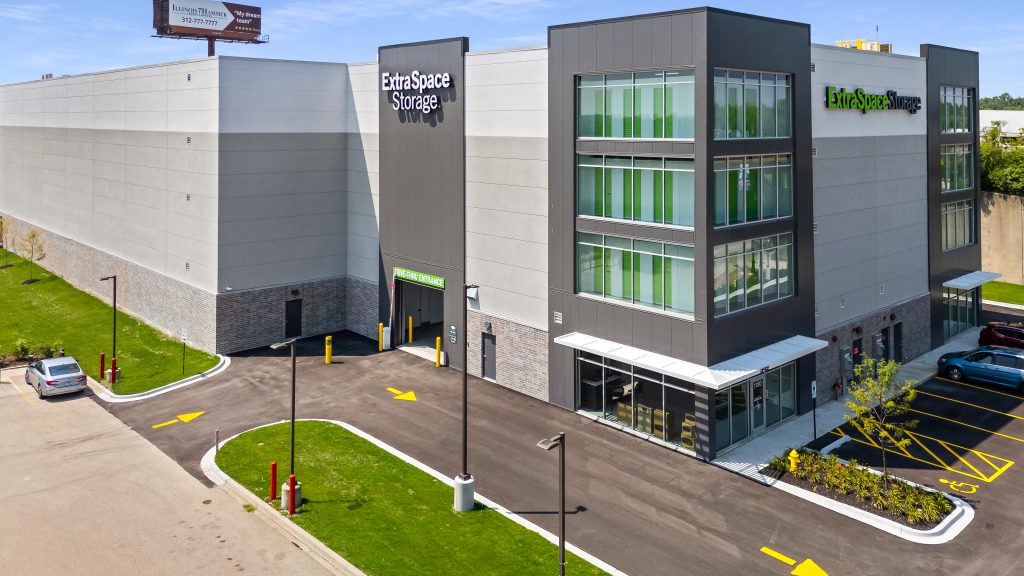
Who are the biggest self-storage companies? The largest are real estate investment trusts and operators including Extra Space Storage, Public Storage, CubeSmart, and National Storage Affiliates, alongside U-Haul. The top firms control a meaningful share of the market, but most facilities are still independently owned.
This article is for general informational purposes only and is not financial or investment advice. Market figures are estimates as of mid-2026 and change frequently. Verify current data before making any decision. This page is updated periodically.