
Key Moments
Define the trade area
Establish a 3 to 5 mile radius considering population, income, growth, and renter share.Measure existing supply
Identify local storage facilities and calculate storage square feet per capita to assess saturation.Verify real demand
Conduct secret shopping to confirm occupancy rates and true market demand beyond raw supply.Build the financial pro forma
Combine unit mix, rates, and lease-up schedule to forecast income and required operating capital.A self-storage feasibility study answers one question before you risk any capital: can this specific site profitably support a storage facility? It does that by measuring the trade area’s demand against existing supply, surveying competitor rates, and modeling whether the resulting income covers the cost to build and operate. A professional study typically costs somewhere around $5,000 to $10,000, but you can and should run a preliminary version yourself first, because if the deal clearly fails on the basics, you save the fee. This guide shows you how.
The study feeds directly into the market-analysis section of your self storage business plan and sits alongside the broader overview in how to start a self storage business.
| Quick facts | |
|---|---|
| What it answers | Whether a specific site can profitably support a facility |
| Cost of a pro study | Roughly $5,000 to $10,000 (estimate) |
| Trade area | Commonly a 3 to 5 mile radius (1 to 3 urban, 5 to 10 rural) |
| Supply benchmark | Often cited around 6 to 8 sq ft of storage per capita |
| Occupancy reality check | Oversupplied below ~80%, balanced 80% to 90%, undersupplied above ~90% |
| Core sections | Trade area, supply and demand, rate survey, unit mix, financial pro forma |
Step 1: Define the trade area
Storage demand is intensely local, so the first job is drawing the boundary. Most studies use a 3 to 5 mile radius, tightening to 1 to 3 miles in dense urban areas and widening to 5 to 10 miles in rural ones. In congested cities, drive time matters more than raw distance, so think in minutes, not just miles.

Inside that ring, gather the demographics that predict demand. Institutional underwriters often look for benchmarks like 30,000 or more people within 3 miles (50,000 within 5 miles for urban product), median household income of at least $45,000 (with $60,000-plus preferred), population growth around 1% or more per year, and a meaningful renter share. The U.S. Census Bureau, local planning departments, and tools like Radius+ supply this data.
Step 2: Measure existing supply
Supply is the easy half. Identify every operating storage facility in the trade area and total their rentable square footage. You can count buildings on the ground, use aerial imagery, or pull data from industry tools. Then divide that total square footage by the trade-area population to get square feet of storage per capita.
The common rule of thumb: a market under roughly 6 to 8 square feet per capita may be undersupplied, while one well above that may be saturated. Treat this as a starting signal, not a verdict. The metric is imperfect, and many analysts now favor units per household. Some markets stay healthy at 3.5 square feet per capita while others absorb 15 or more.
Step 3: Verify real demand (the step most people skip)
Supply per capita tells you what is built, not whether people actually want more. This is where amateur studies go wrong. A market can look undersupplied on paper while local facilities sit at 75% occupancy because real demand is soft. That deal is a pass.
The fastest way to read true demand is to secret-shop the competition. Call and visit every facility in the trade area as if you were a customer. Ask about availability, waitlists, current promotions, and which unit sizes are sold out. Use occupancy as a reasonableness check on your supply math: facilities running above roughly 90% occupancy with waitlists signal undersupply, while a market sitting below 80% signals the opposite, regardless of the per-capita number. Also weigh demand drivers that census data misses: universities, military bases, tourism, dense apartments, prisons, and a local shortage of housing.
Step 4: Survey competitor rates
While you are shopping competitors, record their pricing in detail: street rates by unit size, climate-controlled premiums, administrative fees, deposits, and current promotions. This rate survey is what lets you project realistic revenue rather than hopeful revenue. Climate-controlled units commonly command a 20% to 30% rent premium, which matters for your unit-mix decision.
Step 5: Recommend a unit mix and product type
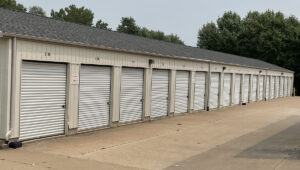
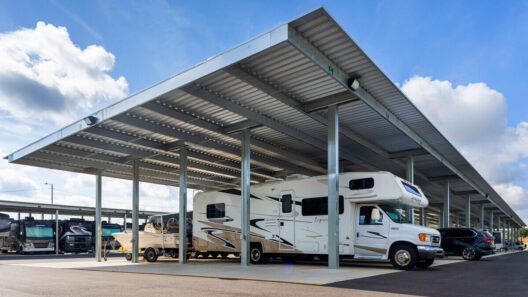
The study should translate demand into a specific build recommendation: how much rentable square footage, in what unit sizes, and what product types. National rental demand skews toward 10×10 and 5×10 units, but local demand can differ sharply. Decide whether the market wants traditional drive-up, climate-controlled units, or RV and boat storage, and size your mix to what is actually selling nearby.
Step 6: Build the financial pro forma
The second most important part, after supply and demand, is the financial model. Combine your unit mix, projected rates, and a realistic lease-up schedule to forecast revenue, then subtract projected operating expenses to reach net operating income. Critically, model the lease-up period, often 1 to 2 years for a new facility, and the operating capital and reserves needed to reach break-even. Many struggling facilities failed here: they ran out of money before occupancy caught up. The construction and startup numbers come from cost to start a self storage business, and the return math from is a self storage business profitable.
Step 7: Reach a clear verdict
A good feasibility study ends with an unambiguous recommendation: build, or do not build, and why. Your lender and any partners may read only that conclusion. If the numbers say the market has demand but the rents will not justify the build cost, that is still a valuable answer, because it stops you from pouring capital into a project that cannot pencil out.
Frequently asked questions
How much does a self-storage feasibility study cost? A professional study commonly runs about $5,000 to $10,000, depending on scope and market. Running a rough version yourself first is wise, since it can rule out a clearly bad deal before you pay for a full report.
What is the difference between a market analysis and a feasibility study? A market analysis measures the state of demand and supply. A feasibility study goes further, adding the financial model to determine whether a specific project can actually be profitable, not just whether demand exists.
What is a good square feet per capita for self-storage? There is no single magic number, but markets under roughly 6 to 8 square feet per capita are often considered potentially undersupplied. Always confirm with real occupancy data, since a low per-capita figure with soft occupancy still means weak demand.
Can I do a feasibility study myself? You can do a solid preliminary version by gathering census data, mapping competitors, secret-shopping their rates and occupancy, and building a basic pro forma. Lenders often still want a professional, third-party study for the final underwriting.
What makes a market oversupplied? A combination of high storage square footage per capita and low occupancy, typically below 80%, with flat or falling street rates. Planned and under-construction competitors can tip a balanced market into oversupply, so always check the development pipeline.
This article is for general informational purposes only and is not financial or investment advice. Benchmarks and figures are estimates that vary by market and over time. Verify local data and consult a qualified feasibility professional before committing capital.