
Key Moments
Understand the unique economics
RV and boat storage yields lower per-square-foot returns, relying on cheap land and volume.Choose your storage type
Different build types affect costs and achievable rental rates.Site selection is critical
Minimum 3 acres and proximity to recreational areas drive demand and costs.Set accurate rates and add amenities
Price by size and protection level; enhance revenue with security and extras.RV and boat storage is one of the fastest-growing corners of the storage industry, often described as where self-storage was 25 to 30 years ago, with real shortages in many markets. The demand is large: more than 8 million U.S. households own an RV and over 11 million boats are registered, and most owners cannot store them at home. This guide covers the storage types, the land and build costs, realistic rates, the profit math, and one important catch that trips up new operators.
For the broader context, pair this with how to start a self storage business and the returns picture in is a self storage business profitable.
| Quick facts | |
|---|---|
| Minimum lot size | Often about 3 acres or more |
| Spaces per acre | Roughly 65 with efficient design |
| Outdoor build cost | Around $15 per sq ft for fenced, paved, secured (estimate) |
| Covered canopy add-on | Roughly $30 to $50 per sq ft extra |
| Typical monthly rate | About $60 to $180, more for covered or enclosed |
| The catch | Big units rent at a lower price per square foot than standard storage |
The catch to understand first
RV and boat storage looks easy because the structures are simple, but the economics have a quirk worth knowing up front. Large vehicle spaces rent for far less per square foot than standard storage units, while the land and paving still cost money. That is exactly why shortages exist: the per-square-foot returns are thin unless your land is cheap. The business works well, but it works on inexpensive land and lots of it, not on the premium parcels a traditional facility can justify. Keep that front of mind as you evaluate sites.
Step 1: Choose your storage type
Your product type sets both your cost and your achievable rate:
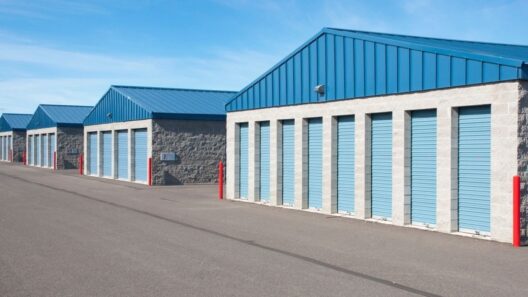
- Open/uncovered parking. The cheapest to build, a fenced, paved, secured lot runs around $15 per square foot. Lowest rates, fastest to open.
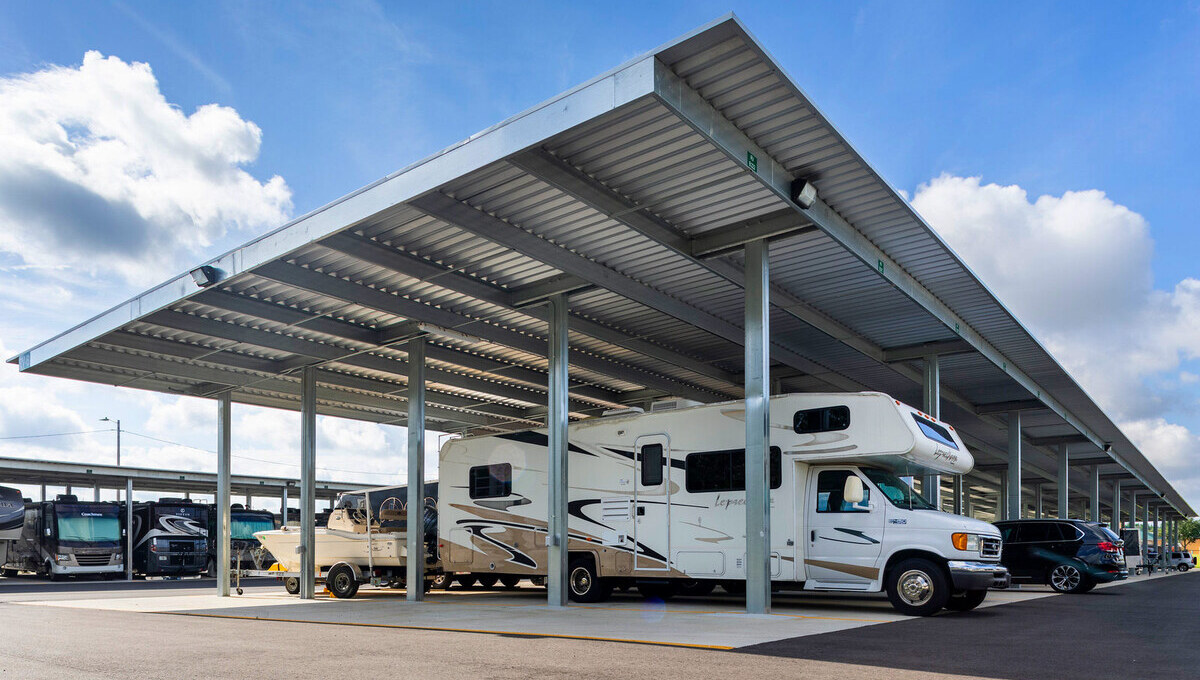
- Covered (canopy). Steel canopies add roughly $30 to $50 per square foot. Popular in sunny or hail-prone regions, and they command higher rents.
- Three-sided (manger style). More protection from wind and weather, mid-to-higher cost.
- Fully enclosed. The highest build cost, but premium, private, secure spaces that justify the top rates.
A mix of types lets you serve both budget and premium renters and lifts your yield per acre.
Step 2: Find the right land
RV and boat storage needs space, with a practical minimum around 3 acres. A well-designed lot fits about 65 spaces per acre, so a 3-acre site can hold roughly 190 vehicles of mixed sizes (before setbacks, retention ponds, and buffers). The advantage over traditional storage: RV owners will drive farther, so you can locate in industrial zones or on the outskirts where land is cheaper. Prioritize sites near residential areas, lakes, rivers, campgrounds, and recreation routes, and confirm zoning early, since approvals for vehicle storage can be slow.
Step 3: Run the preliminary numbers
A simplified worked example shows the shape of the deal. A 3-acre open facility might cost around $1.96 million to develop at $15 per square foot, or roughly $2.3 million including land. With 190 spaces at an average rent of $120 per month, 90% occupancy, and a 25% expense ratio, that produces something like $177,840 in annual cash flow. These are illustrative figures, change every input to your local land price, rates, and occupancy. Build the full model the way you would for any facility, using the feasibility study method and the startup-cost breakdown.
Step 4: Set your rates by size and type
Price against local competitors, by space size and protection level. Standard outdoor spaces commonly run about $60 to $180 per month, with covered and enclosed options higher, and climate-controlled boat or RV space at the top of the range. Size your spaces correctly: small boats and RVs fit 10-foot-wide spaces, while larger rigs need 12-foot widths and wider drive aisles for turning. A good rule is a space at least 5 feet longer than the vehicle.
Step 5: Secure the site and add revenue boosters
Security is non-negotiable for owners storing six-figure rigs: perimeter fencing, gated access, cameras, and lighting. Once open, you can lift revenue with amenities renters will pay for, such as covered parking, wash stations, a dump station, electric hookups, and better lighting. Right-size staffing and use access-control and billing software to keep overhead low.
Step 6: Handle the business setup
Form an LLC, get the required licenses and insurance, and put management software in place. To present the project to a lender, build it out with the self storage business plan template, and consider whether SBA financing fits. If you want an even lower-cost entry, some operators start with container-based storage on the same kind of lot.
Frequently asked questions
Is an RV and boat storage business profitable? It can be, especially with cheap land and covered or enclosed product that commands higher rents. The catch is that large vehicle spaces earn less per square foot than standard storage, so margins depend heavily on low land cost and good occupancy.
How much land do you need for an RV storage business? A practical minimum is around 3 acres. With efficient design you can fit roughly 65 spaces per acre, so 3 acres holds about 190 vehicles before accounting for setbacks and drainage.
How much does it cost to build RV and boat storage? A basic fenced, paved, secured outdoor lot runs around $15 per square foot, with covered canopies adding roughly $30 to $50 per square foot. A 3-acre open facility can total in the low millions including land.
What does RV and boat storage rent for? Commonly about $60 to $180 per month for standard spaces, more for covered, enclosed, or climate-controlled options. Boat storage can range widely depending on size and protection level.
Where should you locate an RV storage facility? Near residential areas, lakes, rivers, campgrounds, or recreation routes, often in lower-cost industrial or outskirt areas, since RV owners will drive farther than standard storage customers. Always confirm zoning first.
This article is for general informational purposes only and is not financial or investment advice. Cost, rate, and profit figures are estimates that vary by market and over time. Get local quotes, verify zoning, and consult a qualified professional before committing capital.