
Key Moments
Low-Cost Modular Model
Starting a container storage business requires lower startup costs and allows incremental scaling.Zoning and Demand Research
Confirm local demand and zoning restrictions before purchasing land or containers.Container Quality and Sourcing
Choosing wind and watertight grade containers reduces repair costs and customer issues.Profit Potential and Pricing
With proper occupancy and pricing, break-even can occur within 18 months, enabling profitability.A container storage business uses repurposed shipping containers as storage units, set up on a plot of land and rented to local customers. Its appeal is simple: it is far cheaper and faster to launch than a traditional facility. Where a ground-up build can run over $1 million, a small container operation often starts in the range of $20,000 to $100,000, scales one container at a time, and carries low ongoing overhead. This guide covers the costs, the economics, and the catches.
If you are weighing this against a conventional facility, compare it with the startup costs of a traditional build and the overview in how to start a self storage business.
| Quick facts | |
|---|---|
| What it is | Shipping containers rented as storage units on a lot |
| Typical startup cost | Roughly $20,000 to $100,000+ depending on scale (estimate) |
| Used container cost | About $2,000 to $3,500 for a 20-foot unit (estimate) |
| Monthly rent per container | Around $100 to $150 (20 ft), $175 to $250 (40 ft) |
| Main advantage | Low cost, fast setup, modular and scalable |
| Main drawback | Condensation and temperature swings limit what stores well |
Why containers instead of a traditional facility
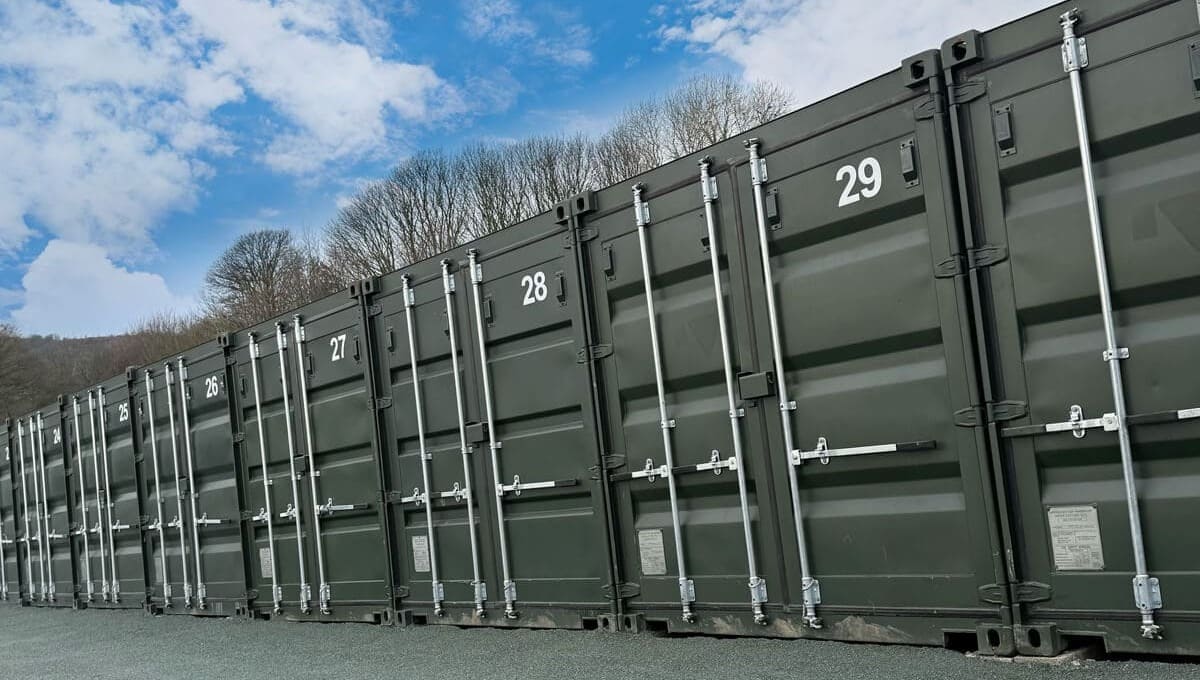
The case for containers is cost and speed. Steel shipping containers are strong, weatherproof, secure, and quick to place, so you skip most of the construction expense and timeline of a conventional storage build. Because the model is modular, you can start with a handful of units and add more as demand grows, and the lot operates with minimal staff. For an entrepreneur who wants into the storage business without seven-figure capital, it is one of the cleanest on-ramps.
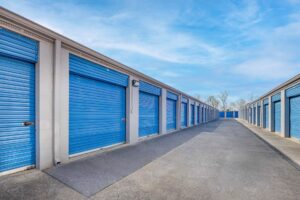

The honest trade-offs: the low barrier to entry means competitors can set up nearby just as easily, returns and resale value are generally lower than a full facility, and containers are prone to condensation and temperature swings, which makes them unsuitable for sensitive items like antiques, electronics, or documents. Set expectations with customers accordingly.
Step 1: Research demand and zoning first
Before buying a single container, confirm two things. First, that local demand exists, using the same approach as a feasibility study: check competitor occupancy and rates in your area. Second, and easy to overlook, that local zoning permits shipping containers on an open lot. Some municipalities restrict or cap the number of containers stored outdoors, and a few prohibit them entirely. Verify this before you commit to land.
Step 2: Secure land and prepare the site
You can lease or buy the lot. Prioritize accessibility (for customers and for the trucks that deliver containers), visibility, and enough room to maneuver large vehicles. Budget for site preparation: a level, well-drained surface (gravel or paved), perimeter fencing, gated access, cameras, and lighting. Security is a core selling point, not an afterthought.
Step 3: Buy the right containers
Container quality matters more than price. The common mistake is buying the cheapest “as-is” units, then paying for repairs and fielding customer complaints. Instead, buy wind and watertight (WWT) grade containers. A used 20-foot container typically runs about $2,000 to $3,500, with 40-foot units costing more. Source from wholesalers, shipping lines, or container trading marketplaces, where buying direct cuts out brokerage markups. Many suppliers have a minimum order of around five units, which is a reasonable starting inventory.
Step 4: Set your rates
Price against your local market, not a national average. As a guide, 20-foot containers commonly rent for around $100 to $150 per month and 40-foot units for roughly $175 to $250. Specialized options, such as climate-modified or vehicle-oriented containers, can command $250 to $400. Secret-shop nearby facilities to set rates that are competitive without leaving money on the table.
The profit math
The economics are attractive because overhead stays low after setup. As one worked example: 50 containers at an average rent of $180 per month and 85% occupancy generate roughly $7,740 per month, or about $92,880 per year. Against startup costs in the range of $96,000 to $145,000 for that scale, break-even can arrive in roughly a year and a half, after which the low operating costs make it consistently profitable. These are illustrative figures, your actual numbers depend on land cost, local rents, and occupancy. For the broader return picture, see is a self storage business profitable.
Step 5: Handle the business basics
Form an LLC to separate personal and business assets, get an EIN, secure the right licenses and insurance, and put management software in place for billing, gate access, and online rentals. A Google Business Profile and clear local-search listings will do most of your marketing in the early days. To present the venture to a lender, build it out using the self storage business plan template.
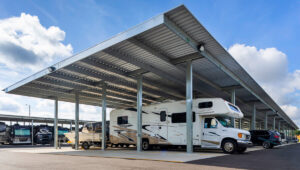
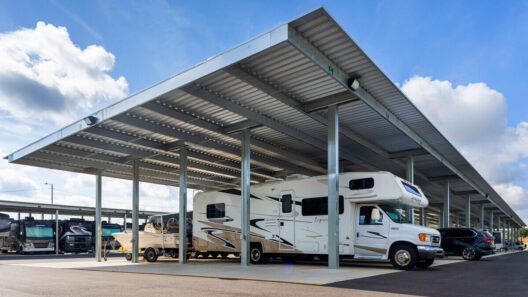
A related path worth noting: some operators expand into outdoor vehicle, RV, and boat storage on the same lot, which needs even less construction. See RV and boat storage business.
Frequently asked questions
Is a container storage business profitable? It can be, thanks to low startup and operating costs. A modest 50-container operation at solid occupancy can generate roughly $90,000 a year in revenue, with break-even often within about 18 months. Profitability depends on land cost, local demand, and occupancy.
How much does it cost to start a container storage business? Commonly in the range of $20,000 to $100,000 or more, depending on how many containers you buy and your land and site-prep costs. Used 20-foot containers run about $2,000 to $3,500 each.
Do you need planning permission or zoning approval? Often yes. Many areas regulate or limit shipping containers on open lots, and some prohibit them. Always confirm local zoning before buying land or containers.
What can’t you store in a shipping container? Items sensitive to temperature swings or condensation, such as antiques, electronics, important documents, and some furniture, are poor fits unless the container is climate-modified. Make this clear to customers.
Where do you buy storage containers? From wholesalers, shipping lines, or container trading marketplaces. Choose wind and watertight (WWT) grade over cheaper as-is units to avoid repair costs and complaints.
This article is for general informational purposes only and is not financial or investment advice. Cost, rate, and profit figures are estimates that vary by market and over time. Verify local zoning, get current quotes, and consult a qualified professional before committing capital.