
Key Moments
Key Pricing Factors
Distance, home size, service level, timing, and access determine your moving cost.Pricing Models by Distance
Local moves are hourly billed, long-distance moves use weight and mileage pricing.Service Level Impact
DIY truck rentals are cheapest; full-service movers are costliest but most convenient.Timing and Access Adjustments
Peak seasons, stairs, and packing services add significant premiums to base estimates.Moving costs are all over the map — a studio across town can run a few hundred dollars, while a full-service cross-country move for a family home can top $10,000. The single biggest question renters and homeowners have before they book is simple: how much will my move actually cost? The calculator below gives you a realistic 2026 estimate in seconds, based on your home size, distance, and how much of the work you want to hand off. Then keep reading for the full breakdown — pricing tables, worked examples, and the extras most people forget.
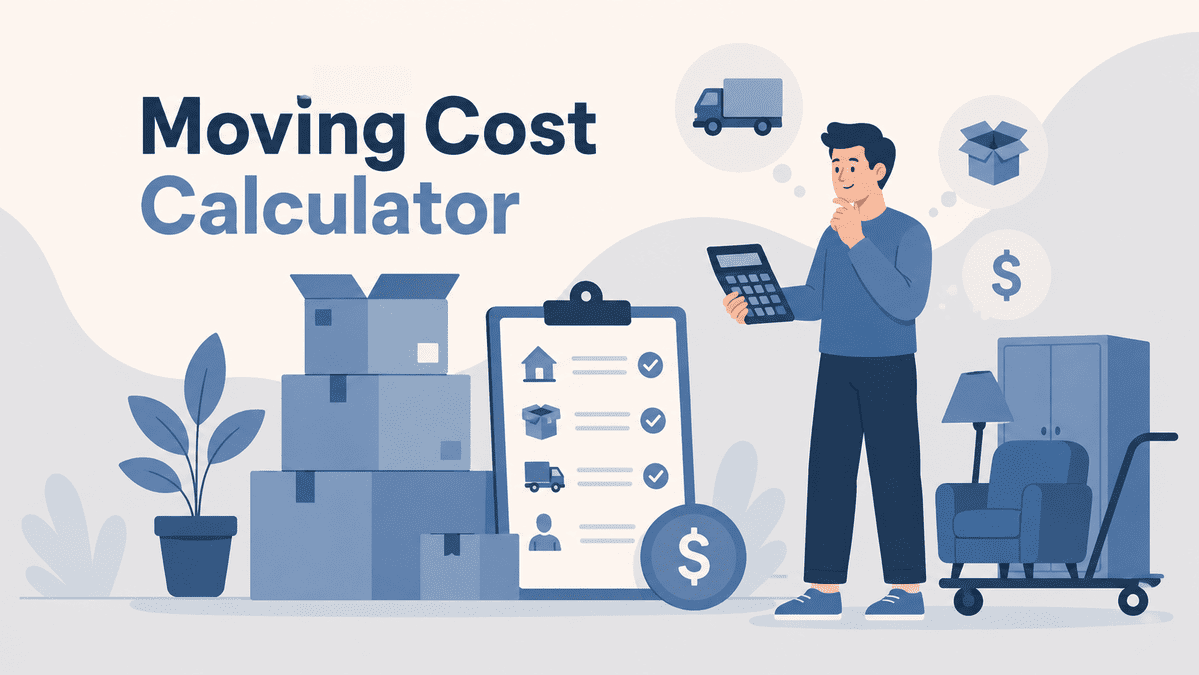
Moving Cost Calculator
Estimate your 2026 move by home size, distance, and how much help you want.
Estimated cost
$0
What the average move costs in 2026
Two numbers drive almost everything: how far you’re going and how much stuff you have. As a starting point for 2026, a local move (under 100 miles) with professional movers runs roughly $500 to $3,500, with a typical two-to-three-bedroom home landing near $1,250. Cross the 100-mile line into long-distance territory and the math changes entirely — interstate moves average around $4,900, and a full household going 1,000+ miles can range from about $1,500 for a light studio to $8,500 or more for a packed four-bedroom. Prices have also crept up: fuel and labor pushed professional rates higher through 2026, and summer remains the most expensive time to move.
The five factors that set your price
Every reputable moving estimate is built from the same handful of inputs. Get these right and your number will be close before you ever call a company.


1. Distance. This decides the pricing model itself. Local moves (under about 50 to 100 miles) are billed by the hour. Long-distance moves (100+ miles, often interstate) are billed by weight and mileage.
2. Home size. Size is a proxy for both hours (local) and weight (long-distance). A studio is a few hundred dollars; a four-bedroom house is several thousand.
3. Service level. Full-service movers who pack, load, drive, and unload cost the most. A moving container is a middle ground. A DIY truck rental is usually cheapest.
4. Timing. Summer, weekends, and the first and last days of the month carry premiums. Off-season, midweek, mid-month dates are cheapest.
5. Access and extras. Stairs, long carries, elevators, tight parking, packing services, and specialty items like pianos or safes all add to the base.
Step 1: Pick your pricing model by distance
Distance doesn’t just add mileage — it changes how the whole bill is calculated.
| Move type | Distance | How it’s priced |
|---|---|---|
| Local | Under ~50–100 miles | Hourly, per crew |
| Long-distance | 100+ miles | Weight plus mileage |
| Interstate | Crosses state lines | Weight plus mileage, FMCSA-regulated |
Step 2: Estimate the base by home size
For a local (hourly) move, start from a two-person crew at roughly $90 to $185 per hour with a two-to-three-hour minimum, then scale the crew and hours to your home:
- Studio or one-bedroom: ~$400 to $900 (2 movers, 3 to 5 hours)
- Two-bedroom: ~$900 to $1,800 (3 movers)
- Three-bedroom: ~$1,800 to $3,000 (3 to 4 movers, most of a day)
- Four-bedroom or larger: ~$2,500 to $4,000+
For a long-distance (weight) move, start from these size-based ranges, then scale up with distance:
- One-bedroom: ~$1,500 to $3,500
- Two to three-bedroom: ~$3,000 to $5,500
- Four-bedroom or larger: ~$7,000 to $10,000+
Step 3: Choose a service level
The same move can cost very different amounts depending on how much you hand off — this is often the biggest lever you control.
DIY truck rental is usually the cheapest. Local truck rentals can run $30 to $500 depending on size and add-ons; long-distance one-way rentals cost more once fuel and mileage are added. You’re paying for the truck and your own time and muscle, which makes it a great fit for studios and one-bedrooms or any move where you have help loading.
Moving containers (the “you pack it, they drive it” model) sit in the middle — about $400 to $700 for a local move, or $900 to $4,500 long-distance. A company drops a container at your curb, you load it on your own schedule, and they transport it. It’s often the sweet spot for long-distance moves where you want to skip the driving but don’t need movers touching your boxes.
Full-service movers cost the most because a crew does everything. Locally they bill by the hour; long-distance, they price by weight and distance, which is why a heavier home costs dramatically more to send across the country. For a plain-English walk-through of crew pricing, see our guide on how much movers cost.
Step 4: Adjust for timing and access
Apply these as modifiers on top of your base estimate:
- Peak season (May to September): add roughly 20 to 30 percent.
- Weekend or month-end: add a premium; midweek and mid-month save.
- Stairs and long carries: about $50 to $75 per flight, plus long-carry fees.
- Packing services: a significant add-on; doing it yourself avoids it.
- Specialty items: extra handling charges for pianos, safes, and oversized pieces.
Worked examples
Example A — small local move. A one-bedroom apartment, two movers, four hours on a midweek day in October. Base around $700, no peak-season premium, one flight of stairs adds a little. Estimate: roughly $700 to $950, before tip.
Example B — mid-size long-distance move. A two-bedroom home moving 1,000 miles in July with full-service packing. Base around $3,500 to $4,500 for the size and distance, plus a summer premium and packing. Estimate: roughly $4,500 to $6,000, before tip.
Example C — budget cross-country move. A one-bedroom moving coast to coast using a moving container instead of full-service movers, packing yourself, in November. Estimate: roughly $1,800 to $3,000.
Don’t forget these line items
A complete moving budget includes more than the movers themselves:
- Packing supplies — boxes, tape, and padding. Cut this with free moving boxes.
- Tips — customary for good service. See how much to tip movers.
- Insurance — basic coverage is minimal (around 60 cents per pound), so consider added protection for valuables.
- Storage — if your dates don’t line up, you may need a short gap. See moving and storage.
- Deposits and permits — some cities require a parking permit for the truck.
How to lower your moving cost
The most reliable savings come from moving less — declutter before you pack, because movers price by weight and space. Move off-season and mid-month to dodge peak pricing. Get at least three binding quotes so you can compare apples to apples, and confirm each is binding rather than a non-binding estimate that can balloon on moving day. Source free boxes instead of buying them, and if you do hire a crew, budget for a tip.
Turn your estimate into a real quote
An estimate gets you a range; quotes get you a price. Always get at least three written quotes from licensed movers, give each company the same accurate inventory and access details, and read what is and isn’t included. For the deeper breakdown behind these numbers, see how much it costs to move, local moving cost, and long-distance moving cost. Planning the rest of the process? Our step-by-step how to move guide and week-by-week moving checklist keep everything on track.
Frequently asked questions
How accurate is this moving cost calculator?
It gives a realistic planning range based on 2026 averages for truck rental, container, and full-service pricing. It’s a planning tool, not a binding quote — your actual price will vary with your exact route, timing, access, and how much you own. Always confirm with written estimates from licensed movers.
What information do I need to estimate my move?
Your origin and destination (or distance), home size or a rough inventory, the service level you want, your move date, and any access challenges like stairs or tight parking.
Is it cheaper to hire movers or move yourself?
Moving yourself with a rental truck is almost always cheaper, especially for smaller homes and shorter distances. Full-service movers cost more but save significant time and physical effort, which can be worth it for larger homes or long-distance moves.
How much does it cost to move out of state?
Interstate moves average around $4,900 and commonly range from $1,500 to $8,500+ depending on home size and distance. See our dedicated cost to move out of state guide for a full breakdown.
When is the cheapest time to move?
Fall and winter (October through April), mid-week, and mid-month are the cheapest windows. Summer weekends at month-end are the most expensive because demand peaks.
This article is for general informational purposes only. Estimates reflect typical 2026 U.S. pricing and are not a quote. Always obtain written estimates from licensed movers before budgeting your move.