
Key Moments
Prepare Utilities and Safety Before Move-In
Set up utilities early, deep clean, change locks, and test detectors before furniture arrives.Manage Moving Day Efficiently
Conduct walkthroughs, confirm utilities, protect floors, and prioritize essentials on moving day.Organize Unpacking in the First Week
Unpack rooms sequentially, update addresses, test detectors, and meet neighbors.Complete Settling-In Within the First Month
Install curtains, register for local services, deep clean again, and recycle moving boxes.Getting the keys is the finish line of one process and the start of another. The smoothest moves happen when the new home is prepped before the truck arrives, the right things happen on moving day, and the first week is spent on the essentials rather than chaos. This checklist breaks the new-home phase into three stages so you always know what comes next.
Quick facts: new home move-in
| Stage | Focus |
|---|---|
| Before move-in | Utilities on, deep clean, safety, key spots |
| Moving day | Walkthrough, utilities check, priority rooms |
| First week | Unpack essentials, safety setup, settle in |
Before you move in
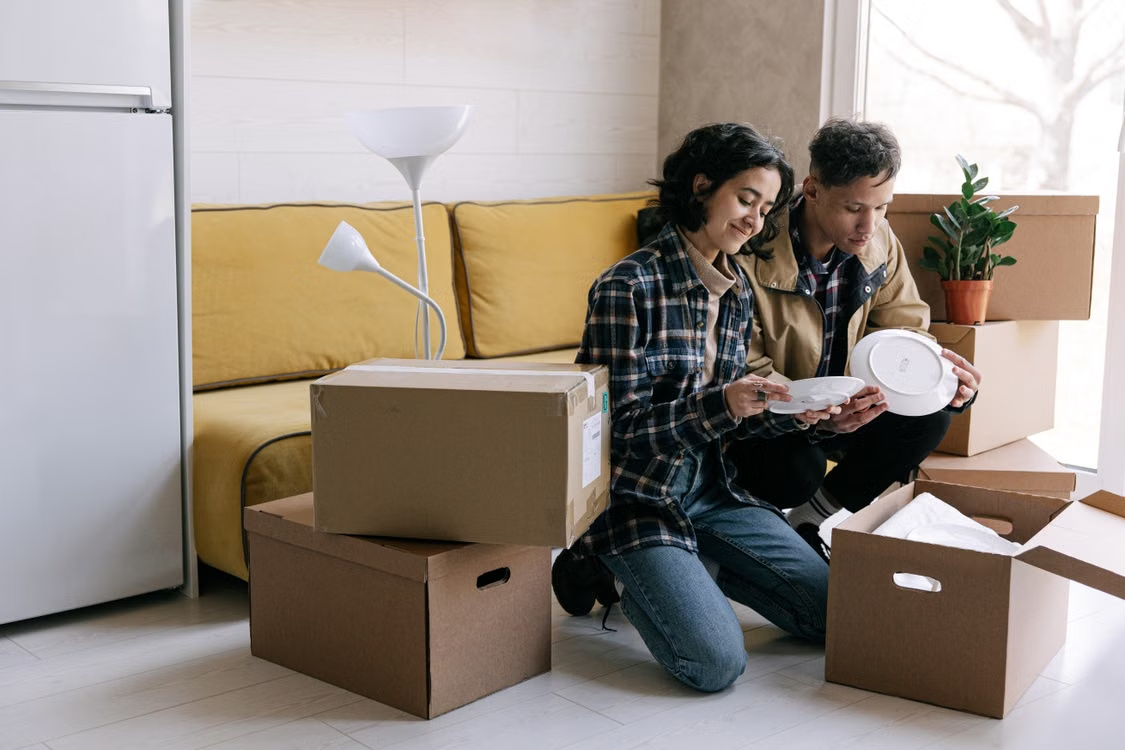
Do as much of this as you can while the home is still empty. It is far easier without furniture in the way.
- Set up utilities so power, water, gas, internet, and trash are active on day one. Schedule these a couple of weeks ahead.
- Deep clean the empty home, or have it cleaned. Floors, bathrooms, kitchen, and inside cabinets are much easier to reach now.
- Change the locks or rekey exterior doors. You do not know who has copies of the old keys.
- Check smoke and carbon monoxide detectors and replace batteries.
- Locate the essentials: the main water shutoff, the circuit breaker panel, the gas shutoff, and the HVAC filter. Knowing where these are before an emergency is worth the five minutes.
- Plan your furniture layout so movers can place large items once instead of twice.
- Do any painting or simple work that is easier in an empty house.
On moving day
- Do a quick walkthrough before the truck is unloaded to confirm the home is clean and ready.
- Confirm utilities are working, especially water and power.
- Protect floors and doorways if the movers have not, to avoid damage.
- Direct boxes to the right rooms. Clear labeling pays off here, which is one reason it helps to label boxes by room while packing. See how to pack for a move.
- Set up the essentials first: beds, a working bathroom, and a few kitchen basics so the first night is comfortable.
- Keep your essentials box with you, not on the truck. Phone chargers, medications, toiletries, a change of clothes, and basic tools should be easy to reach.
If your move-in date and move-out date do not line up, you may need a short gap where your belongings sit safely in between. Our guide to moving and storage covers how to bridge that.

The first week
- Unpack room by room, starting with the kitchen and bedrooms, so daily life works while you finish the rest.
- Update your address everywhere it matters. The change of address checklist walks through every account to notify.
- Find your fuse box and shutoffs again and make sure everyone in the household knows where they are.
- Test smoke and CO detectors in every room.
- Meet the neighbors and learn trash and recycling days.
- Locate nearby essentials: grocery store, pharmacy, urgent care, and your route to work or school.
- Inspect for issues like leaks, drafts, or pests while everything is fresh, so you can address them early.
Settling in over the first month
- Hang curtains or blinds for privacy if they are not already up.
- Register for any local services, library cards, or community accounts.
- Deep clean again after unpacking, since boxes and foot traffic leave a mess.
- Break down and recycle moving boxes, or pass them on.
- Finish updating any accounts you missed in the first-week rush.
This checklist is the move-in half of the bigger picture. Pair it with the full moving checklist for everything leading up to the move, and if you are relocating across state lines, the moving out of state checklist covers the extra steps.
Frequently asked questions
What should I do first when moving into a new house? Before furniture arrives, confirm utilities are on, deep clean, change or rekey the locks, and test smoke and carbon monoxide detectors. These are easiest in an empty home and matter most for safety.
Should I change the locks on a new home? Yes. Rekeying or replacing exterior locks is a low-cost step that removes the risk of old keys being out there. Do it before or on move-in day.
What should be in my moving day essentials box? Phone chargers, medications, toiletries, a change of clothes, basic tools, paper towels, and snacks. Keep it with you rather than on the truck so you are not digging through boxes the first night.
How long does it take to fully settle into a new home? Most people get the essentials working within a week and finish unpacking within a month. Going room by room rather than all at once makes it far less overwhelming.
The bottom line
A good move-in is three stages: prep the empty home (utilities, cleaning, locks, safety), run moving day with a walkthrough and an essentials box, and spend the first week on the essentials before the details. Work the stages in order and your new place feels like home faster, with fewer surprises.
For the entire move from planning to unpacking, see our complete guide to moving.
This article is for general informational purposes only. Always follow local regulations and manufacturer guidance for utilities, detectors, and home systems.