
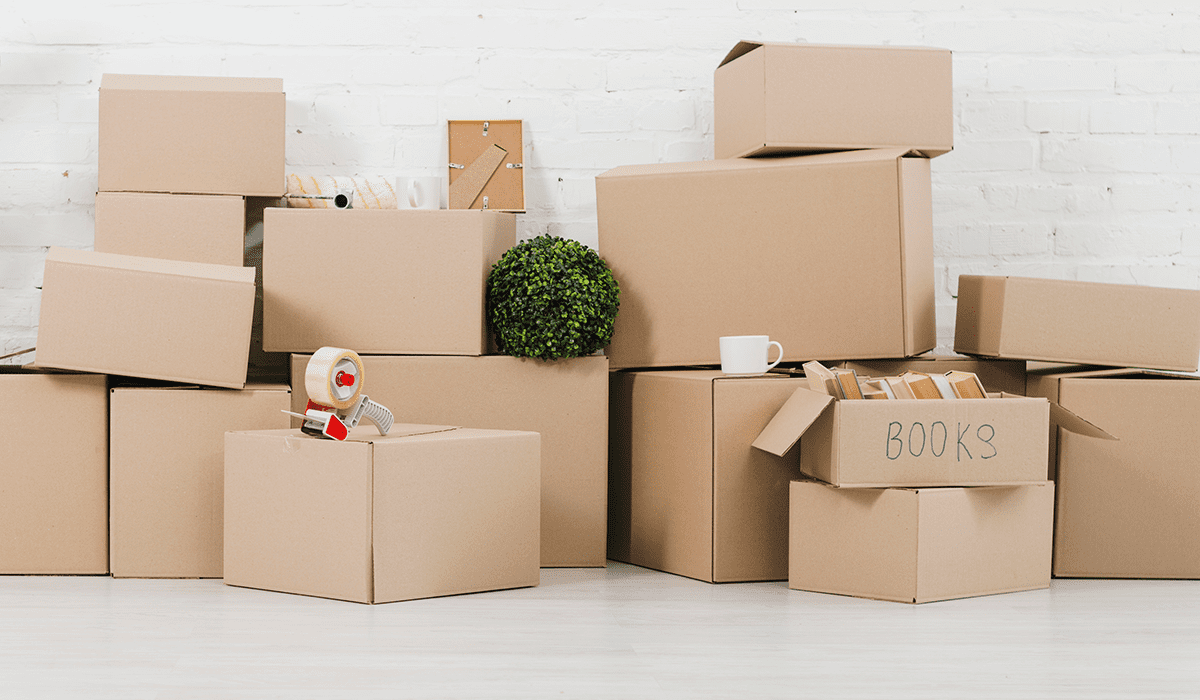
Key Moments
Start Packing Early
Begin packing 4 to 6 weeks before moving day with seldom-used items and work progressively toward daily essentials.Golden Rule of Box Weight
Place heavy items in small boxes and light items in large ones to ensure safe lifting and prevent damage.Effective Labeling
Label boxes with room and contents on the side, mark fragile items clearly, and consider color or number coding.Room-by-Room Packing Order
Pack storage areas first, living spaces next, kitchen near the end, and keep essentials until last.Packing is the most time-consuming part of any move, and it is where most of the stress and breakage happens when people rush it at the end. The fix is a system: start early, pack in the right order, label everything, and protect the fragile and heavy items properly. Here is how to do all of that.
Quick facts: packing for a move
| Detail | What to know |
|---|---|
| When to start | 4 to 6 weeks before moving day |
| Pack first | Rarely-used items and off-season things |
| Pack last | Daily essentials and an essentials bag |
| Label by | Room and contents, on the side of the box |
| Golden rule | Heavy items in small boxes, light in large |
Start early and gather supplies
Begin a few weeks out with the things you do not use day to day. You will need:
- Boxes in a few sizes (small, medium, large) plus specialty boxes for dishes and wardrobe
- Packing tape and a tape gun
- Packing paper, bubble wrap, or towels and linens as padding
- A marker for labeling
- Stretch wrap and moving blankets for furniture
You do not have to buy all your boxes. See where to get free moving boxes for reliable free sources.


What to pack first (and last)
Pack in order of how much you use things:
- First: off-season clothes, books, decor, spare linens, rarely-used kitchen gear, the garage and storage areas.
- Middle: most of the house, room by room, in the weeks before the move.
- Last: daily essentials, a few kitchen basics, toiletries, chargers, and a change of clothes. Keep these in an essentials bag you carry yourself, not on the truck.
The golden rule of box weight
Put heavy items in small boxes and light items in large boxes. A large box full of books is impossible to lift and likely to break; a small box of books is manageable. Distribute weight so no box is too heavy to carry safely, and fill gaps with padding so nothing shifts.
How to label boxes
Good labeling saves hours on the other end:
- Write the room and a short contents note on the side of the box, not the top, so it is readable when stacked.
- Mark fragile boxes clearly on multiple sides.
- Consider a color or number system tied to a simple list, so movers know which room each box goes to.
Clear labels mean boxes land in the right room on moving day, which makes unpacking far faster.
Room-by-room order
Storage, garage, and closets first. These hold the things you use least, so they are the easiest to pack early.
Living areas and bedrooms next. Books, decor, and out-of-season clothes can go well ahead of time. Leave a few days of clothing out.
Kitchen near the end. It is the most tedious room. Wrap dishes individually (liquor and wine boxes with dividers are ideal for glasses), nest pots, and pad fragile items well.
Bathroom and essentials last. Toiletries and daily items go into your essentials bag the night before.
Fragile and heavy items
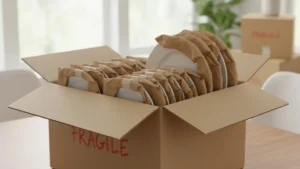
- Dishes and glassware: wrap each piece in paper, pack plates on their edge (not flat), and use dividers for glasses.
- Electronics: use original boxes if you have them, or pad well and keep cables labeled.
- Furniture: disassemble what you can, keep screws in labeled bags taped to the piece, and wrap in moving blankets.
- Specialty items deserve their own approach. A piano and a mattress, in particular, need specific methods, covered in how to move a piano and how to move a mattress.
A few packing tips that save the day
- Keep a “first night” box clearly marked so you can find bedding, a phone charger, and basic toiletries fast.
- Take photos of complex electronics setups before unplugging so you can reconnect them easily.
- Do not over-pack boxes to the point they will not close flat; they need to stack.
- Tape the bottom of every box well, especially used ones.
- Pack a small toolkit and keep it accessible for disassembly and reassembly.
Frequently asked questions
When should I start packing for a move? About four to six weeks before moving day. Start with rarely-used items and work toward daily essentials, which you pack last.
What should I pack first when moving? The things you use least: off-season clothes, books, decor, and the contents of storage, the garage, and closets. Leave daily essentials until the end.
How do I pack fragile items so they don’t break? Wrap each piece individually, pack plates on edge rather than flat, use boxes with dividers for glassware, fill all gaps with padding, and label the box fragile on several sides.
Should heavy items go in big or small boxes? Small boxes. Heavy items like books in a large box become too heavy to lift safely and can break the box. Keep large boxes for light, bulky things.
The bottom line
Pack with a system and it stops being the worst part of moving. Start early with what you use least, follow the heavy-in-small-boxes rule, label everything by room and contents, and give fragile and specialty items the protection they need. Keep an essentials bag with you, and you will arrive organized instead of overwhelmed.
For the full timeline and the whole process, see the moving checklist and our complete guide to moving.
This article is for general informational purposes only. Follow manufacturer guidance for packing electronics and specialty items.