
Key Moments
Top Reliable Free Box Sources
Liquor and grocery stores offer the most sturdy and available free boxes for moving.When to Collect Boxes
Start gathering free boxes about 4 to 5 weeks before your move to ensure enough supply.How to Inspect Box Quality
Always check for dampness, tears, and pests before using free boxes for packing.Best Online and Community Options
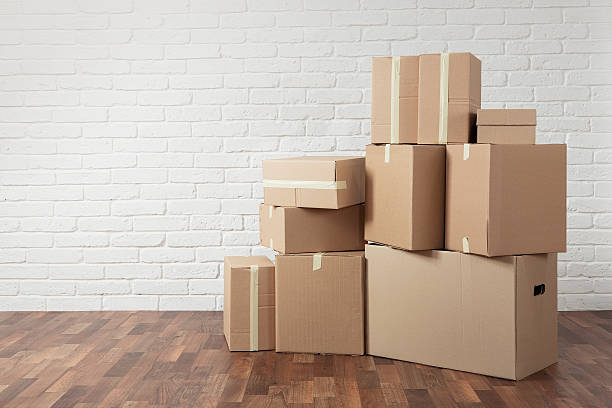
Facebook Marketplace and Buy Nothing groups provide large quantities of free boxes locally.Buying boxes for a typical household move can run $100 or more, and they get used once before they are recycled. With a little timing, you can cut that line item to nearly zero. The catch is that not all free boxes are equal. Some sources are reliable and sturdy, others are hit or miss, so this guide ranks the best places to look and shows you how to tell a good box from one that will collapse halfway down the stairs.
Quick facts: free moving boxes
| Detail | What to know |
|---|---|
| Typical box cost if bought | $2 to $4 each, $100+ for a full move |
| Most reliable free source | Liquor stores and grocery stores |
| Best online source for volume | Facebook Marketplace, Buy Nothing groups |
| When to start collecting | About 4 to 5 weeks before your move |
| Always check for | Dampness, stains, tears, soft corners, pests |
The most reliable local sources
These tend to have usable boxes most of the time. The trick is timing: stores break boxes down fast, so ask when their next delivery arrives and offer to come the same day.
1. Liquor stores. Often the single best free source. They receive heavy bottles in thick, sturdy boxes, many with built-in dividers that are perfect for glasses and dishes. The boxes are small to medium, so they are easy to carry and hard to overload.

2. Grocery stores. The most consistently available option in most cities. Produce and dry-goods boxes are sturdy, and banana boxes in particular are tough. Smaller independent grocers are often the most accommodating.
3. Bookstores. Book shipments arrive in compact, heavy-duty boxes sized to handle weight, which makes them ideal for books, media, and other dense items.
4. Office supply and copy centers. Copier-paper boxes are a favorite among movers: strong, uniform, and they come with lids, so they stack and label easily.
5. Your own workplace. Many offices receive regular shipments and recycle the boxes within days. Ask your manager or facilities team, and ask coworkers to set aside delivery boxes in the weeks before your move.
6. Big-box and home improvement stores. Home Depot, Lowe’s, Costco, Target, and Walmart receive large daily shipments. Availability varies by store, day, and shift, so it is worth asking but not guaranteed.
7. Recycling centers. Many collect clean cardboard before processing. Ask staff whether any intact boxes are set aside for reuse, and be clear you want whole boxes, not flattened scraps.
The best online and community sources
These let people come to you instead of driving around.
8. Facebook Marketplace. One of the best sources for volume. People who just moved post boxes constantly, and a single listing might include 30 to 50 boxes in mixed sizes you can grab in one trip.
9. Buy Nothing groups. The whole culture is built on giving things away, so posts tend to be genuine and local. A quick request often gets several offers.
10. Craigslist (free section). Still a goldmine. Search the “free” section for “moving boxes” plus your area. Be a little cautious and arrange quick, simple pickups.
11. Nextdoor and Freecycle. Neighborhood-focused platforms where recent movers offload boxes. Post a short request and respond fast, because free boxes get claimed quickly.
12. U-Haul Box Exchange. A free community program where people list leftover boxes for others to claim. Enter your zip code to find boxes nearby, and many U-Haul locations also have a “take a box, leave a box” area for gently used supplies.
Your personal network: the easiest source of all
Before any of the above, ask friends, family, neighbors, and coworkers who recently moved. They often have stacks of standard moving boxes sitting in a garage and are glad to clear the space. The bonus is you can ask how the boxes were used and trust the quality.
How to check box quality before you use it
Free is only a bargain if the box survives the trip. Before you load anything valuable, check that each box is:
- Dry and clean, with no water stains or dampness that weakens cardboard.
- Structurally sound, with firm corners and no soft spots, tears, or punctures.
- Pest-free, with no signs of insects or droppings.
Reinforce the bottom of any borderline box with strong packing tape, and save free boxes for lighter or non-fragile items. For heavy or breakable loads, sturdy liquor and book boxes, or a few purchased ones, are worth it.
When to buy instead
If you are on a tight timeline, need a specific size, or want a large matched set, buying can be the practical call. Standard boxes run about $2 to $4 each, with bundle discounts. Specialty boxes for dishes, mirrors, wardrobes, and TVs are also worth buying for the items that need them. Mixing free boxes for the bulk of your packing with a few purchased specialty boxes is usually the best value.
Free boxes are one of the simplest ways to cut a moving budget. For the bigger picture on costs, see local moving cost and estimate your full budget with our moving cost calculator.
Frequently asked questions
Where is the best place to get free moving boxes? Liquor stores and grocery stores are the most reliable in-person sources, and Facebook Marketplace or Buy Nothing groups are best for grabbing a large quantity online in one trip.
When should I start collecting moving boxes? About 4 to 5 weeks before your move. That gives you time to gather enough, sort for quality, and avoid a last-minute scramble.
Are free moving boxes safe to use? Yes, as long as they are clean, dry, and structurally sound. Avoid boxes with stains, soft corners, or signs of pests, and reinforce the bottoms with tape. Use sturdier or new boxes for heavy and fragile items.
Does U-Haul give free boxes? Not new ones, but many locations have a “take a box, leave a box” area for gently used supplies, and the U-Haul Box Exchange connects people giving boxes away with those who need them.
The bottom line
Start with your own network, then work the reliable in-person sources (liquor stores, grocery stores, bookstores, offices) and the high-volume online ones (Facebook Marketplace, Buy Nothing, U-Haul Box Exchange). Check every box for dampness, tears, and pests before trusting it, and buy only the specialty sizes you truly need. Start a few weeks out and you can box up a whole move for almost nothing.
Once your boxes are sorted, see how to pack for a move, and for the whole process, our complete guide to moving.
This article is for general informational purposes only. Always inspect used boxes for damage and pests before packing valuables.