
Key Moments
When Storage Is Needed
Storage is useful when move-in and move-out dates don’t align, or during downsizing, renovations, or staging.Storage Options and Costs
There are three main storage types: self-storage, portable containers, and full-service storage, each with different cost and convenience levels.Choosing the Right Storage
Select storage based on budget, convenience, and how much hands-on involvement you want during your move.Storage Restrictions and Savings
Avoid storing hazardous or perishable materials and rent storage off-peak to reduce costs.Not every move goes door to door on a single day. Sometimes there is a gap between when you have to be out of the old place and into the new one, sometimes you are downsizing and not ready to part with things, and sometimes the new home is not ready yet. That is where storage comes in. This guide explains when storage during a move actually makes sense, the three main options and what they cost, and how to choose between them.
Quick facts: storage during a move
| Option | Typical monthly cost | Best for |
|---|---|---|
| Self-storage unit | About $50 to $300 | Lowest cost, you transport items |
| Portable container | About $90 to $270 + delivery/pickup (~$75 each) | Convenience, load once at home |
| Full-service storage | Highest cost | Hands-off, movers handle everything |
Costs are national estimates and vary by size, location, climate control, and season.
When you need storage during a move
Storage earns its cost in a few common situations:

- A gap between leases or closings. Your move-out and move-in dates do not line up, so your belongings need somewhere to wait.
- Downsizing. You are moving into a smaller place and not ready to decide what goes, so the overflow goes into storage for now.
- Selling and staging. Clearing furniture out of a home you are selling makes it show better, and storage holds it until you land.
- Renovation. The new home needs work before everything can come in.
- Long-distance logistics. On a cross-country move, a short storage window on one end can smooth out timing.
The three main options
Self-storage units
You rent a unit at a facility, drive your belongings there, and access them during facility hours (some modern facilities offer 24/7 access). Sizes run from small 5×5 lockers up to 10×30 units that hold several rooms.
- Cost: the cheapest monthly option, roughly $50 to $300 depending on size and climate control. A 10×10 averages around $122 a month, a 5×10 around $75.
- Trade-off: you load and unload twice, and you may need a rented truck to get items there.
- Best for: budget-conscious storage, especially anything longer than a few months. Climate-controlled units protect wood furniture, instruments, and electronics.
Portable storage containers
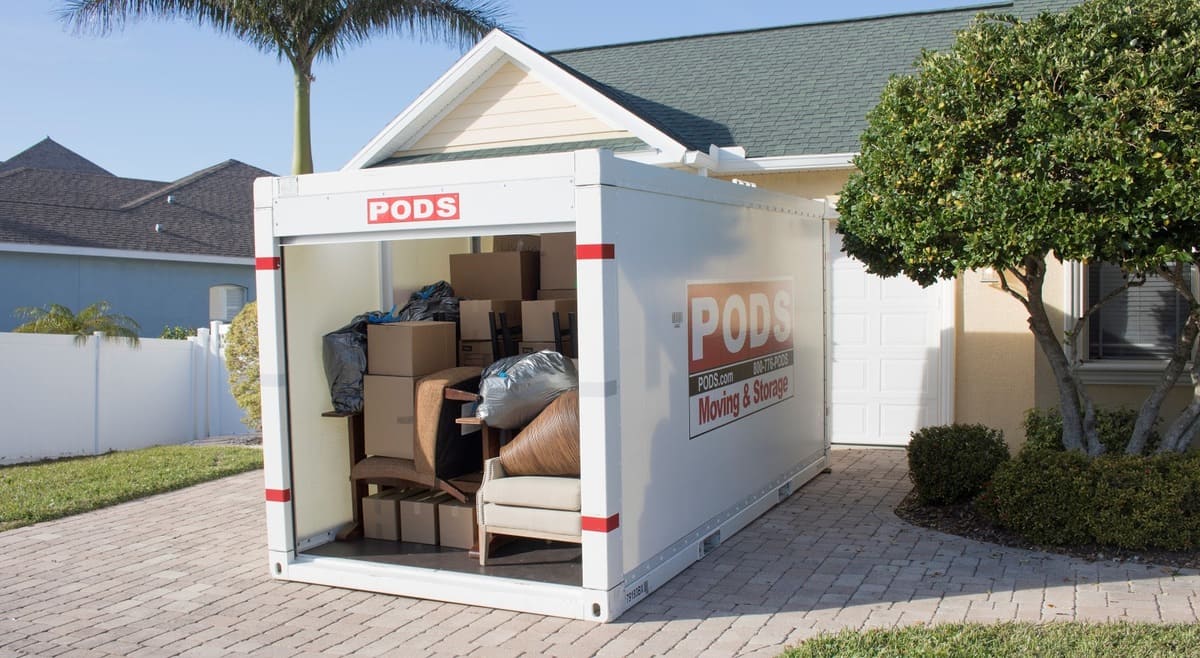
A company drops a steel container at your home, you load it on your own schedule, and they either leave it on your property or haul it to their facility or your new home. Brands include PODS, U-Haul U-Box, 1-800-Pack-Rat, and U-Pack.
- Cost: roughly $90 to $270 a month, plus delivery and pickup fees around $75 each. U-Box tends to be the cheapest, PODS the priciest.
- Trade-off: higher overall cost than a self-storage unit, and your home or street needs space for the container (some areas require a permit).
- Best for: active moves and renovations, since you load once and never rent a truck. Containers double as a moving method on long-distance moves.
Full-service storage
Movers pack, collect, store, and redeliver your belongings. It is the most hands-off option and the most expensive, suited to people who would rather pay to not touch any of it.
How to choose
A simple way to decide:
- Pick self-storage if cost is the priority and you do not mind transporting items, especially for longer storage.
- Pick a portable container if you want convenience, are mid-move or mid-renovation, and have space to park it.
- Pick full-service if you want it handled for you and budget is not the deciding factor.
A few practical notes: rent off-peak (roughly October through February) and watch for move-in specials like a free first month, choose the smallest space that fits, and remember you cannot store hazardous materials, perishables, or plants in any of these options.
How storage fits your moving budget
Storage is one more line item alongside movers, supplies, and tips. Factor it in early so it does not surprise you. On a long-distance move, storage interacts with your transport choice, see long distance moving cost, and if the gap is on the front end, the new home moving checklist covers timing your move-in.
If you are curious about the industry behind those units, our separate guide on how to start a self-storage business looks at self-storage from the owner’s side rather than the renter’s.
Frequently asked questions
Is it cheaper to use a storage unit or a moving container? A self-storage unit is usually cheaper per month, but you transport everything yourself. A portable container costs more once delivery and pickup fees are added, but it saves you the truck rental and the double loading.
How much does storage cost during a move? Self-storage units run roughly $50 to $300 a month, and portable containers around $90 to $270 plus delivery and pickup fees. Size, location, climate control, and season all affect the price.
Do I need climate-controlled storage? For sensitive items like wood furniture, instruments, electronics, and important documents, climate control is worth the extra cost, especially in regions with temperature and humidity extremes or for longer storage.
What can’t I put in storage? Hazardous materials, flammables, perishable food, and live plants are not allowed in self-storage units or containers, because they create safety and pest problems.
The bottom line
Storage bridges the gaps a move creates, whether that is a timing gap, a downsizing decision, a sale, or a renovation. Self-storage is the budget choice, portable containers are the convenient one, and full-service is the hands-off one. Match the option to your situation and budget, book the right size off-peak, and storage turns a stressful timing problem into a simple line item.
For the whole move from planning to unpacking, see our complete guide to moving.
This article is for general informational purposes only. Storage prices and availability vary by provider, location, and season. Always compare quotes and read the rental terms before committing.